One of the most interesting figures in recent paleontology is the ““Baby Yingliang”A dinosaur embryo that died inside the egg as it was about to hatch and remains virtually intact to this day. There are fossils Between 66 and 72 million yearsIt comes from Ganzhou in Jiangxi Province, China and was described in a 2021 study published in the journal iScience by a team from China, the UK and Canada.
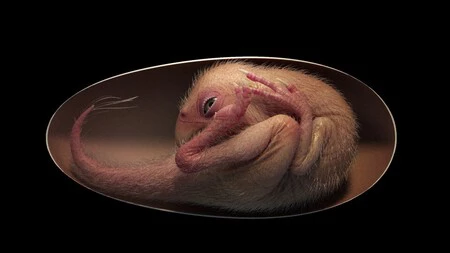
What caught the most attention of the researchers was the pose of this baby dinosaur. The head is below the body, the legs on either side and the back bent against the blunt end of the egg, a position which A non-avian dinosaur is never seen And it reminds me of a chicken shortly before birth. And, Fionn Wysum Ma, a researcher at the University of Birmingham and co-author of the work, explained in his university’s press release: “Dinosaur embryos are among the rarest fossils and are mostly incomplete, with displaced bones. We are very excited about the discovery of Baby Yingliang: it answers many of our questions and helps us recover dinosaurs.”
Forgotten in a warehouse for fifteen years
The story of the discovery is also intriguing. The egg was recovered around 2000 as a possible fossil and spent years in storage until 2015, with Kecheng Niu, its curator, not knowing what was inside. Yingliang Stone Natural History MuseumHe noticed her.
Lida
fetus Measures approximately 27 cm from head to tail And it is coiled inside a 17-centimeter egg, which today is preserved in the museum that gave it its name in China. Researchers identified it as one because of its long, toothless skull oviraptorosaurA group of feathered theropod dinosaurs, very close to modern birds, that lived in Asia and North America during the Cretaceous period. Darla Zelenitsky, a paleontologist at the University of Calgary who specializes in dinosaur eggs and co-authored the study, told National Geographic: “I couldn’t believe my eyes, because it’s perfectly preserved.”
Same posture as a chicken before hatching
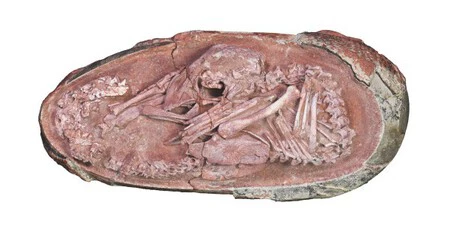
“Baby Yingliang”, a fossilized oviraptorosaur fetus between 66 and 72 million years old.
The pose in which the fossil was found is reminiscent of babies being adopted before birth. By the 17th day of incubation, the embryo assumes an anterior position and by the 20th day it is fully shrunk, which is called “quietly”. The next day it breaks the shell. This movement is controlled by the central nervous system and is important for successful hatching “Baby Yingliang” looks like a 17-day-old chicken.
By comparing this embryo to other oviraptorosaurs, long-necked sauropods, and birds, the team proposed that this behavior, which was believed to be unique to birds, first appeared in theropods. Dinosaurs from which they descend. Parts of the body are still encased in rock, so their idea is to study it with advanced scanning techniques to see the entire skeleton, including the skull.
Steve Brusset, a paleontologist at the University of Edinburgh who signed the work, summed it up this way: “This tiny prenatal dinosaur looked a lot like a chicken curled up in its egg, further evidence that many of the features of today’s birds were first seen in their dinosaur ancestors.”
photo Julius Sotoni – University of Birmingham