The company’s IPO operations are planned in detail for months, but D-Day is dictated by the calendar. Anthropic chose its own and wanted to debut on Nasdaq before Thanksgiving. He had already presented his accounts, got all the permits and even selected the banks that were going to handle his share sale. At that precise moment, a perfect storm was brewing on Wall Street.
Within days, elections that didn’t go as expected turned the US political scene upside down, leading to a Black Thursday for tech companies and exposing the world’s most assets to AI. According to what was published The Wall Street JournalNow, everyone sees Claude’s company differently.
Nasdaq is losing patience…and a lot of money. On Thursday, the tech index closed down 5.5%, leaving a trail of losses estimated at $2.5 trillion in one day. He who has a bad afternoon reads less. The index closed more than 10% below the previous record on October 6, recording its worst session since April 2025. As detailed CNNNvidia fell 9.3% and the index of chipmakers fell 12.3%.
Behind the decline is a growing skepticism among investors about when such spending on AI will pay off. Alphabet and Meta’s results failed to calm anyone down. Sameer Samana, Senior Global Market Strategist at Wells Fargo Investment Institute said: Reuters That there was “a lot of uncertainty, stagnation and sudden changes in policy”.
A price that no longer suits them. Dario Amodei’s idea was to raise up to $100 billion with a valuation close to (and higher than) $1.5 trillion. According to sources The Wall Street JournalThree large investors who plan to enter Anthropic’s IPO believe that valuation should be lowered. Some see it closer to a trillion dollars than the $1.5 trillion that was considered in the latest estimate.
This price is more important than it seems, because a part of its shareholders’ money comes in the form of shares. With a lower starting price, you have to give up more participation for the same amount of capital. Doing a quick math, 6.7% of 100,000 million companies worth 1.5 billion. At a billion, that would represent giving up 10%. Alternative exits include settling for a lower raise (perhaps $80 billion) or hitting the middle road and delaying the IPO until the mood calms down and achieves a satisfactory valuation.
OpenAI is already noticing this drop in investor expectations and has “only” raised $11 billion out of $30,000 with a $1.25 trillion valuation. A Spanish proverb has a message for Amodei: “When you see your neighbor shaving, wet your own.”
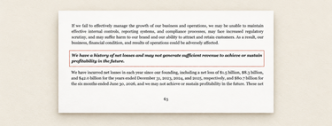
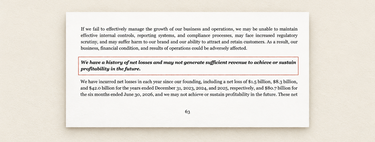
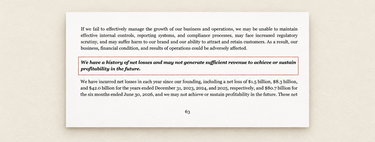
A bill that doesn’t wait. In general terms, Anthropic is in “good” financial health and, at least in the short term, its valuation decline does not imply its financial bankruptcy. The company generates 17 billion in revenue per quarter but, according to data in its S-1 filing, computing power accounted for 58% of that revenue in the third quarter, compared with 48% in the previous quarter. Demand was higher than expected and additional computing capacity had to be purchased in the short term. Growth slowed and was 47% in the quarter, after 144% in the previous quarter.
Spending commitments total about 895.4 billion, almost entirely in the computing and infrastructure column. About $69.8 billion will mature over the next twelve months. The company raised another $100 billion in October alone, roughly what it could have raised from the IPO. Of course, it had $146.6 billion in liquidity as of September 30. That is, getting a good rating will make things easier for Amodei.
A note that makes debt more expensive. Blackstone, which funds the chips for Anthropic, has already warned investors that it expects a BB rating after the company’s stock market debut. It is a step below investment grade. This downgrade in rating doesn’t close the door to financing, but it does make lending more expensive, as riskier lenders want to charge more interest.
On the other hand, its S-1 prospectus discloses that its line of credit has collateral. They are released only if two of the three major agencies (Moody’s, S&P and Fitch) assign it an investment grade. A weak Nasdaq debut doesn’t help you get the good ratings you need.
In Xataka | Anthropic designed a peculiar system of powers to prevent shareholders from controlling it after its IPO
Picture | Flickr (TechCrunch)