NASA has just unveiled a new experimental aircraft with a pilot on board, and the truth is that it leaves your mouth wide open for what it can do: It is not a passenger plane or a fighter, but an in-flight research platform that will allow studying how an aircraft responds to maneuvering conditions that, according to the National Aeronautics and Space Administration, have never been directed before flight operations.
A laboratory with wings. The X-70 Fractal will end up in a story, the X Plane, that NASA uses to test technologies before reaching the real plane because Bell’s differential feature will be that it will have a flight control system that can be quickly reconfigured, which will allow testing in all kinds of situations.
It “allows advanced flight controls, maneuverability and other cutting-edge technologies to be tested in real flight,” explained Jared Isaacman in his presentation at the UP Summit at Kennedy Space Center. As? Thanks to a modular design and the ability to quickly exchange internal and external payloads.
Why is it important?. Because it is an aircraft with a reconfigurable pilot and controls, it allows to evaluate how an aircraft behaves with different handling characteristics, something very valuable for the design of future aircraft and control systems. Additionally, modularity allows the same platform to be used for multiple programs. In short: instead of operating different planes for each line of research, a single one is used, changing the load and configuration.

its specification X-70 Fractal. Likewise, it lets you play with around 900kg of test loads, whether internal or external. Moreover, it is not an autonomous aircraft, but requires a pilot.
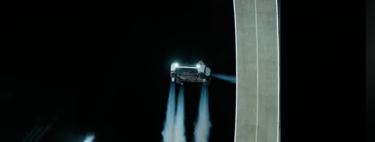
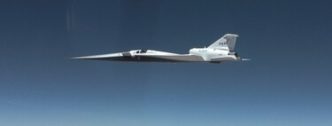
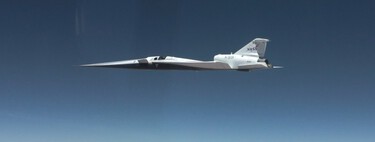
Its design is a mystery. The bad news is that NASA has provided the only image of the aircraft that this article illustrates and it is computer generated, so there is no actual image of the aircraft. Space coverage outlet Space.com explains that its weight is similar to that of Scaled Composites and Northrop Grumman’s Model 437 Vanguard, and in addition, the silhouette resembles it. In the absence of official data, everything indicates that it will be an aircraft of compact size and high subsonic performance, designed for control and maneuver studies rather than pure speed.
This is not the only unknown. Although there’s no detailed test schedule, in theory we won’t have to wait long to see it in action: Isaacman says its first flight under NASA’s mandate will take place within the next two years. Of course, this is more of an intention than a guarantee, take the X-59 as an example: awarded to Lockheed Martin in 2016 and expected to be ready by 2020, its first flight materialized in 2025, as PopSci recalls.
For now, we just have to wait for NASA to clarify the unknowns, such as who will build the plane and its budget, as well as its test schedule and, soon, the release of real images of the plane.
In Xataka | NASA has shown a shadow and the reaction is unanimous: we are probably facing the successor of the SR-71 Blackbird.
In Xataka | NASA dreamed of taking us to space like an airplane: 15 years later, the shuttle is still irreplaceable
cover NASA with AI