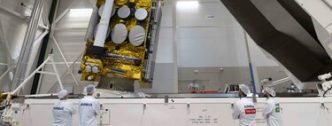
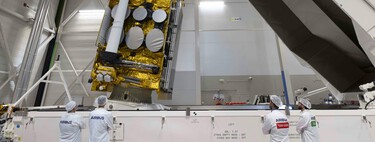
On October 20, 2026, a 6U satellite was launched from Cape Canaveral, Florida aboard a SpaceX Falcon 9 rocket. The launch, which is part of the shared Bandwagon-5 mission, is a Spanish milestone, as it is the first electric propulsion satellite built in Spain.
More Spanish than paella. The satellite was built by the Spanish company Fossa Systems. It is the 27th release since 2020; Therefore, according to the statement collected by Space newsThe Spanish company will already have the most objects in orbit. As for its electric propulsion system, called ATHENA Nano, it is the work of the Madrid company IENAI Space. Full of Spanish technology.
Bandwagon-5. A shared mission is one where multiple companies or organizations rent the same rocket from a single company to launch their devices simultaneously. In this case, 31 other payloads traveled alongside the FOSSA satellite, including SpaceX’s Starfall reentry capsule.
Electrospray. This is the name of the propulsion system used by this satellite. Broadly speaking, it consists of a deposit of liquid salt from which an electric field ejects ions at great speed. It causes the vehicle to move by action-reaction.
In reality, the Athena Nano system had already flown into space, as it had already flown on a satellite launched on Spectrum 2 by the German Issar Aerospace. Now, therefore, it works with another Spanish company for the first time.
A constellation with two uses. The FOSSA constellation is responsible for ensuring secure communications and detecting and analyzing electromagnetic emissions from space. It can have both civilian and military applications.
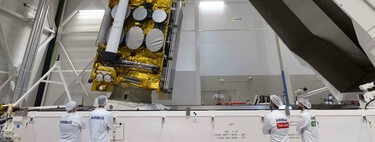
And now what? The launch took place at 1:04 pm. (Spanish Peninsular Time) on October 20, was a complete success. Now, we have to wait a few days for the first ignition run of the satellite. Later, common constellation maneuvers will be simulated, such as getting into operational orbits, maintaining position relative to the rest of the satellites, and avoiding collisions with other satellites or space debris. If all this works properly, it will be able to join the rest of the FOSSA satellites to carry out its mission.
New headquarters. All this happened a few days after FOSSA presented its new headquarters in Las Rojas (Madrid). These are 3,000 square meter facilities where both manufacturing activities and satellite integration and operations take place. This is intended to increase both the production and complexity of the satellites they build. At this moment, the satellite that went into space is already twice as big as the previous ones. This could be the beginning of a new era for the FOSSA system.
Picture | FOSSA
In Xataka | PLD Space has detailed plans to become Europe’s rocket factory. And the pieces are starting to fit