No vehicles will pass through A-5. This is the approach that has been put on the table before one of the most important moments in the work being done to bury the road at the entrance to Madrid. One of the key moments comes. Because of the steps that will be taken and the difficulties that may arise.
the junction. This is the technical name. To put it down to street language, we can talk about the connection between the tunnel dug since the burial of the A-5 and the current exit of the M-30 tunnel. Madrid’s magnum opus faces a crucial moment.
This intervention is very important because the intention is that, once the new tunnel joins the previous one, the cars will already be moving underground. This is when a second tunnel will begin to be dug. When it’s finished, they can be used for every direction of traffic.

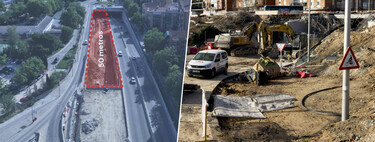
What is going to be done? The key to being able to connect the old and new tunnels is to demolish the entrance and exit ramps of the previous tunnel. In this way, both tunnels will be connected at the same height and the driver will not have to go up and down suddenly, for example, in Madrid Rio near the old Vicente Calderon state.
Work on the underpass at the moment is completing the necessary facilities for safe travel underground. In fact, the first excavation work has already been completed but steps continue to be taken in the installation of electrical systems and safety components.
For when? That’s the big question. There is no fixed date on the calendar but there is an approximate one: the end of the year. According to the Madrid City Council, this is done when traffic is reduced due to the Christmas holidays. At that time, total traffic will be cut, as experienced last summer with another key intervention connecting both tunnels.
The problem is, at least for now, there is no estimated time frame for the tasks to be completed. That is, we know when the tunnel will be cut, but the city council has not indicated when it will be opened. The move will not be taken until it is done “with complete credibility,” in the words of Borja Caravante, Madrid City Council’s head of mobility, as reported. Europa Press.
And plans? Again, this is something that has yet to be confirmed. The Madrid City Council, at this link, provides a chronological review of all the traffic problems that the city is suffering in this area. Once the cutoff times arrive, you will be notified about them but you will see what was done on the previous occasion.
For now, what is mentioned is the generality. It has been specified that the idea is to try to divert traffic around the M-40 and Carabante has announced that it will contact those responsible for Renof to increase the circulation of trains on the C-5 line.
It must be remembered that the first days of work were a bit chaotic with the reduction of traffic in January 2025. Since then, the situation has improved but drivers coped in the early days with the installation of an improved bus station and a bus lane at the Cuatro Vientos station which until now did not exist.

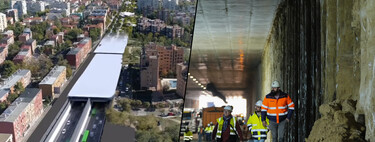
“no return”. What Madrid’s mobility chief wanted to make clear is that we are facing a point of “no return”. Once the connection between the tunnels is ready and traffic resumes, it will do so below the surface and we will no longer see cars on what has until now been an urban highway.
Excavation for the parallel tunnel will begin at that time. Finally, once both are finished, construction can begin on a park that promises to completely change the look of the neighborhoods around Aluche, Bataan and Lucero. Until now they were separated by a highway with four lanes in each direction; Once completed, a large park will allow them to connect to the Casa de Campo.
Picture | Xataka
In Xataka | The southern entrance to the A5 underground is already 80% excavated, and there is one culprit that has sped up the work: soil.