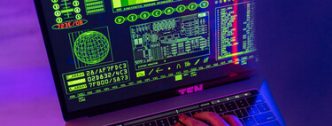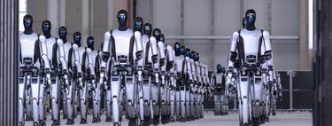
Unitree Robotics wants AI to do most of the things its engineers do today, whether it’s searching for research, writing control code, testing it, and learning from the results. The company’s founder, Wang Xingxing, introduced the concept as a “self-evolving” robot development system at the company’s Physical AI conference in Hangzhou on Thursday, calling it a priority for the company.
Why does it matter? Although it may not seem like it, teaching a humanoid robot a new skill is slow. According to Wang, engineers need to collect data, model and tune the behavior of trains, and rework a skill that works in the laboratory in a new environment. Unitree wants to automate that cycle so robots can learn new skills faster and on a larger scale.
Wang told the South China Morning Post that as AI models improve, he expects them to adopt more planning and iteration, reducing the need for human intervention.
How it works. Wang shares, the system works as a closed loop where AI agents search for research articles and then write control code for the robot. That code is then tested and trained in simulation. Once the tests are completed, the best results are verified to be used in the real robot. And then, an independent evaluation system, with human input when needed, qualifies the result to move on to the next round. Media reports that the project is called “Unity Rehearsal.”
Back in August, during the World Robot Conference in Beijing, Wang noted that dramatically improving development efficiency and even allowing robots to develop on their own is “very valuable.”
Bet behind it. As shared by media 36Kr, Wang assures that a strong base AI model makes the loop more effective. More robots on the ground will generate more real-world data, further improving models and helping robots accumulate skills over time. He links this to his view that general-purpose AI models are advancing rapidly. Unitree is testing OpenAI’s GPT-6 on its robots, and Wang says that in internal tests, the robots are already performing tasks such as painting and playing Go (a popular strategy board game in China) without specific training.
between the lines. Unitree is entering a new phase, and it shows. The company has built its reputation on hardware such as joints, power systems and motion control, and its robots are best known for dancing, running and boxing demonstrations. But as industry moves from building robots to making them useful, software and “brains” are even more important. Wang defended his robot’s stunts at the same event, arguing that if a robot can’t walk or run well, it can’t be expected to do practical work.
There are still limits. What Unitree has released is more of a proof of concept than anything else, as the effectiveness of this new training method, the transfer of skills and the success they’ve achieved with it in the real world have yet to be proven. Additionally, according to SCMP, the video showing robots using GPT-6 to map routes and plan movements did not specify how consistently they could iterate in an unknown environment.
Then there’s the physical part, as Wang admitted to the media that AI models handle planning and navigation well, but still make mistakes when it comes to actually manipulating objects. Objects are easy to grasp; Assembling the precision parts required while adjusting position and force in real time is still a challenge. Wang says that aligning the model’s input and output with a real robot is still the biggest challenge.
As SCMP shares, Stanford University’s 2026 AI Index showed that robots succeeded in only 12% of real-world household tasks, despite performing much better in simulations.
When will a robot be useful?. Wang suggested to the outlet that humanoid robots could be cleaning rooms as early as 2027 or 2028. In Hangzhou, he also said he expects Unity’s robots to start entering homes later this year or next. Allow me to doubt Mr. Wang.
In Xataka | They staged an MMA fight between a YouTuber and a ‘Terminator’-style robot: the machine delivered a monumental kick.