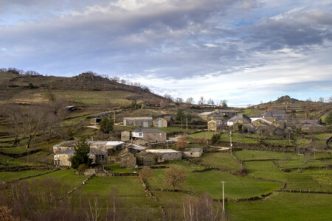
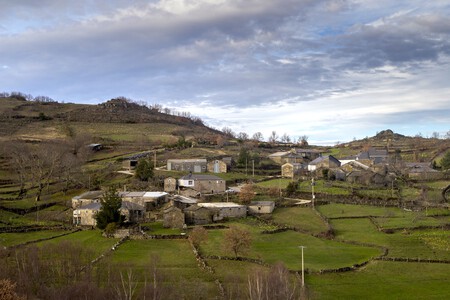
There are those looking for a house in the city to retire to and those who perhaps want to set up a winery, a bakery or a hostel in the middle of the urban frenzy and live at a different pace. For the latter, there’s Holapueblo, a website that connects entrepreneurs with councils who need someone to restart a shuttered business. According to Faro de Vigo three Orense municipalities have just signed up: Chandrexa de Quixa, Castrello de Mino and Beariz. Their common argument is that there is plenty of space and tranquility.
What is Holapueblo? A platform promoted by Redeia, IKEA and AlmaNatura. It offers personal advice on finding housing and starting projects, including regional and local support. They are the managers who remove suspicion and act more like windows than house raffle.
Chandrexa de Quixa. At 985 m, it is the highest municipality in the province. It has 467 neighbors (up from 478 a year ago) spread over 172 square kilometers: 2.7 inhabitants per square kilometer. With more than 1,300 cattle and 3,500 sheep, its economy is based on cattle and it offers communal pastures and certain incentives for new herders or beekeepers.
It is also sold as a tourist opportunity: Manzaneda station is 15 minutes away, Ribera Sacra 30 minutes away and the accommodation offer is reduced to isolated tourist houses. It is the most remote: it is accessed via the OU-0602 from Montederramo or via the OU-0703 from A Pobra de Trives. There is room for rural houses, hostels, restaurants and active tourism, they say. However, in August 2025, a fire that started in Chandraxa has burned more than 10,500 hectares, the second largest in the history of Galicia.
Castrelo de Miño, wine and reservoir. It is the most populous of the three, with 1,289 inhabitants (but in 1981 there were more than 5,500 and about 44% of its neighbors were aged 65 or over), and it is 25 km from the capital. It boasts the highest concentration of wineries in Galicia: 23 from DO Ribeiro, one for every 65 inhabitants. Added to this is a 560-hectare reservoir, with a yacht club and river beach at the Prado. If I could, I’d leave without a second thought.
The council insists it has a school, medical center and pharmacy and will renovate the house from €45,000. The image contrasts with what was circulated a year ago: El Cronista spoke of stone houses from 10,000 euros and a 90% bonus on municipal taxes for entrepreneurs under 30 years old. Castrello is the closest, about 25 kilometers from Ourense.
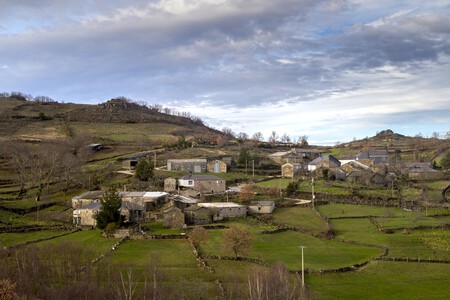
Beariz, escape and a mine. 901 residents and many options. It provides local tax exemptions and free access to communal forests for livestock or forestry projects after one year of residency. It has a high-speed connection, a municipal co-working space and wants to strengthen the Lebojan industrial estate.
Look for hospitality, traditional bakeries, local trade and services for the elderly. And the Dode lithium mine is waiting to create jobs. This project, which the European Commission included among the 47 strategic ones, is still in regional processing and, according to El Debate, it is planned to start extraction in 2028. That is, part of his plan depends on a permission that does not yet exist, even though it is in his near future. Bearridge is reached via OU-212.
small print The key is distance from advertising. Castrelo’s €45,000 is to renovate the houses, so the work will add to that figure. The Chandrexa and Beariz incentives speak of communal pastures and forests: many of their surrounding communities in Galicia are governed by their own rules, so it is worth asking what conditions are imposed and on whom.
In Biarritz, admission is available after one year of residency (although this is usually granted without much fuss). And regarding tax exemptions, the text does not detail the amount or requirements. It also does not mention what services Chandexa and Bears have beyond the Bears connection. Castrello boasts a school and a doctor and a small town which is half the package.
Independence and solitude. This is certainly not an isolated incident. As we mentioned a few weeks ago, 80.2% of Spanish municipalities have lost population since 2011, and almost half of the houses in cities with fewer than 10,000 inhabitants are empty. A declaration, by itself, does not change that trend. The ads are promising and there is no shortage of peace, but you have to work and winters in Chandrexa or Castrello are usually not easy.
Cover image Carlos Portella and Antonio L. for Flickr
In Xataka | In the remote towns of Cuenca it is possible to find houses for 9,000 euros. The real problem comes later