
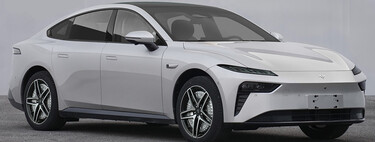
In 1976 Mercedes took the first step to put the Mercedes W124 on the road. The car, an example of an indestructible vehicle, took eight years to reach the dealership. The reason is remarkably simple: reliability. For eight years, Mercedes sought to limit the fatigue resistance of its components. And to find them he ran tests over two million kilometers.
Eight years and two hundred thousand kilometers They summarize the painstaking work the company puts in before launching a car and being able to certify that it can withstand whatever they throw at it. This has resulted in some crazy stories. Like the owner who kept his W124 for over a million kilometers. And they provide the perfect context for understanding how a Greek taxi driver managed to put 4.58 million kilometers on his W115, a car you can now find in the Mercedes Museum.
What must be taken into account is that this way of working is also a consequence of survival time. They explain PowerArt That W124 was designed to last 300,000 km. And that, exactly, is replicated during a development today. But these tests are done with a computer because no company can afford to keep their test mules working for years.
Yes, cars are still being put on the road but a good part of reliability testing is left to the computer so that resistance simulations tell us how long a part will last and how much it will wear.
Today, in 2026, we live at the opposite extreme. The automobile industry prides itself on keeping a car on the road in record time. For example, the latest statement coming from Stellantis.

Two years ago on the road
With the European Union jumping on electric cars and a public that doesn’t quite embrace it, manufacturers have scrambled to find solutions. And one of them is to put cheap electric cars on the road in the shortest possible time.
The problem with small cars is that they leave minimal profit margins. And if this already happened when the machine was oiled and thousands of cars with proven combustion engines rolled off the assembly line, imagine that a new way of doing things and a new assembly line were needed to make a new technology profitable. Or, at least, modernize your already one.

Reducing emissions has become a very complex task with small combustion cars, so much so that these cars have seen huge price increases in recent years. The problem is, without selling enough units, putting an A-segment electric car on the road and making it profitable is a nearly impossible mission.
I’m not saying that, Ned Curic, head of product and technology development at Stellantis, said in an interview. L’Argus Last Paris Motor Show time.
“A-segment cars are very difficult to build and make profitable. One of our development principles is Simplify as much as possibleConsidering the need to maintain a very safe, enjoyable and practical vehicle and make it affordable. “We believe we have designed this A-segment platform with all the necessary components to be competitive on price.”
This platform, as confirmed by Curic himself, is a well-known source: Leapmotor. The Chinese company, partially acquired by Stellantis in 2023, has contributed its know-how to be able to produce the Citroën 2 CV in two years. This car is the company’s big hope to put an incredibly cheap electric vehicle on the road, and it’s clear that it wouldn’t have been possible without China.
“Our City platform has been in the market for a while and it’s something we do well. But we’re learning from Leapmotor how to go faster. We learned to design a car in two years (…) In some ways, they operate like West Coast technology companies. They don’t follow exactly the same process as us. “The way they design electrical architecture or software gives us a lot.”
This way of working they want to bring to Europe because, according to the company, “We’ve brought technical development and staff back to our European design office to scale this development. It’s truly designed in Europe, made in Europe.”

When Carlos Tavares announced a partial purchase of Lipomotor, it was already suggested that this might happen. Stellantis has the right to sell the company’s vehicles outside Chinese borders, solving Leapmotor’s distribution problem. But not only that, the idea was to learn, to gain knowledge so that these companies manage to build small electric cars in record time and at such a tight cost.
It can be said that the knowledge that once led to Europe-China is returning today.
Stellantis wants to bring the benefits of this knowledge A very common electric car Such as the Citroën 2 CV but the smaller Fiat Panda in the future, known as the Fiat Pandina, to maximize the benefits of the investment.

But they are not the only ones. When Renault introduced the Twingo it made it clear from the start that this small electric car was made in China. It was something like this Designed in China, Made in Europe. Those with Rhombus put the same argument on the table: in China they learned to build their small electric car in two years and learn to build it at a cost that didn’t make them lose money selling each unit.
In the case of Stellantis and Renault This is the latest example but not the only one.. Omoda and Jaecoo maintain that one of their main qualities is, precisely, their adaptability. Something that people who work there confirmed to us.
But it’s something experts have been warning about for some time. From market analysts to companies that provide consulting for automobile manufacturers. All this proves that the world has changed. Spending eight years building a car and four years on reliability testing can send a good message to the customer. But surely this is not a good message for investors.
Picture | Stellantis Chat is edited with GPT
In Xataka | Experts in assembling and disassembling cars are very clear about where the Chinese advantage lies: it is impossible to do it cheaply