
The Valencian community has opened one of the thorniest melons facing the Spanish education system: what to do with students (or teachers) who go to the classroom wearing a burqa or niqab? This is a relevant question because, although today it does not seem that such incidents are occurring frequently, it is equally undeniable that Spain is an increasingly diverse country, with significant immigrant and Muslim populations.
Against that background, they are evident in the Valencian community: faces, always visible.
Break the watermelon. The laws accompanying the budget act as a large ‘catch-all’, text that hides measures that affect the use of public resources and the daily life of administration. Law 5/2026 of the Valencian Community is no exception. In its extensive articles (approved on July 31, although it was published a month earlier in the BOE) we find measures related to taxes, powers and regulations.
This combination includes a measure that, while expected, has raised particular interest: the regulation of certain clothing associated with the Islamic world in public spaces. The law does not specifically talk about the burqa. niqab is hijab (in fact, they are not even mentioned); But it does something just as effective: it modifies certain rules that affect users of public transportation, hospitals, and school campuses.

“properly discovered”. The changes introduced by the Act are as subtle as they are relevant. The regulation of coexistence in schools and institutes of the Valencian Community now includes a new requirement that affects students. Which one? “Keep your face adequately covered throughout the academic day, both inside the classroom and in the rest of the school campus’s rooms and facilities.”
Failure to do so, the law clarifies, will be considered a serious offence.
“This duty is a fundamental principle of respect and coexistence, which is essential for socio-affective interaction, linguistic communication, the development of the teaching-learning process and ensuring the organizational security of the center,” he emphasized. The law clarifies that both users of public transportation and hospitals and facilities where the show is offered must follow the same guidelines: “Keep their faces adequately covered.”
Why is it important? Because, you remember the worldThe Valencian community’s decision is a milestone. Until now, schools in Spain have decided whether students can cover their heads through their coexistence rules. Neither state nor local law has fallen on such a slippery slope.
At most, local regulations apply in Spain that limit their presence in streets or squares. This is the case of the recently vetoed Leyda Indeed Use of the burqa with fines between 400 and 750 euros. Or Zaragoza, which opened the same watermelon to control access to municipal buildings. In both cases, the councils are limited in their powers, which do not include education.
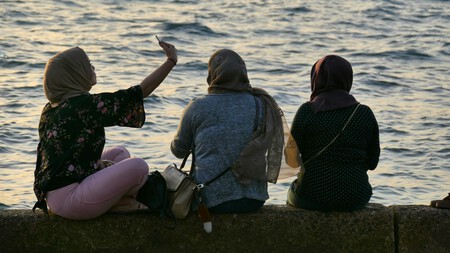
GBIC (Unsplash).
What matters… and when. To understand the decision of the Valencian community, there are several keys to keep in mind. and context. The regulation clearly went ahead thanks to the PP and Vox in the pre-election environment, although in July, when the regulation was approved, the election had not yet been brought forward. Moreover, it occurs in a region with one of the most diverse classrooms.
According to a recent report presented by the Europa Society and Education Foundation and the Ramon Areces Foundation, the Valencian Community was one of the autonomies with the highest weight of foreign students in the 2024-2025 academic year. This represents 18.5% of the national average, which stands at 12.9%. In fact, only the Balearic Islands surpass it. As a reference, the representation of foreign students in Extremadura is only 4.5% and Galicia 6.3%.
Is it really necessary to control it? The million dollar question. The Valencian visit was recognized the world That, at least for now, there is no incident of female students wearing burqas niqab. However, it is not unreasonable to think that it will become increasingly common to find diverse classrooms made up of boys and girls raised in homes with an Islamic tradition. In fact, there have already been certain controversies with students wearing veils in class.
According to the CEU CEFAS Demographic Observatory, at the beginning of 2025, 2.4 to 2.5 million Muslims lived in Spain, representing about 5% of the total population. Not only that. Its analysts estimate that 11% of children born in Spain in 2024 had at least one Muslim parent. There are some provinces where this percentage is higher and is close to (even exceeds) 20%.
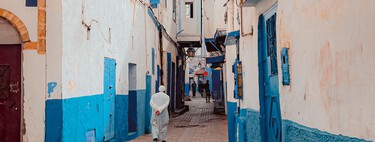
“Neither religious nor cultural”. Controlling the use of veils is not an easy task. Doing so requires opening a thorny debate where the right to education, religious freedom, gender equality, protection of minors, neutrality of public space and civil safety intersect. Therefore, the Valencian canon does not speak directly about the burqa niqab and leaves their guidelines hijab is ShaylaClothing that does not cover the entire face.
“It is not a religious or cultural issue. It is a question of student identity,” they clarified the world From the Valencian Ministry of Education. Other regions where PP and Vox rule leave their rules unchanged, which leaves the ball in the court of each school and institute.
Of course, there are autonomous communities that regulate dress in the classroom, but they don’t go as far as the Valencian community. The controversy is by no means exclusive to the Valencian community. Not even from Spain. In France, with a large Muslim population, it opened a few years ago.
Picture | Michael Wave (Unsplash) and Zibic (Unsplash)
In Xataka | Veil is not synonymous with Islam. In the past many Muslim women used to ignore it