
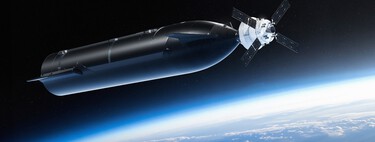
NASA wants to launch more missions into space, but it’s running into its own bureaucracy. Because of this, on October 21, the director of the agency’s Scientific Mission Directorate, Nicky Fox, announced a series of changes to its mission selection process. Although SpaceX is never mentioned, by doing so they want to move closer to a philosophy similar to that of Elon Musk’s company, whose maxim has long been: launch, launch and launch.
Less bureaucracy. Today, for a NASA mission to reach space, it must meet a series of technical and financial requirements that greatly delay the launch. For this reason, scientific merit will be given more importance in the preliminary assessment from now on, leaving engineering and finance later. This will be considered in the following stages, which will depend on the size of the mission.
Three types. Broadly speaking, depending on the scale of the mission, NASA missions can be divided into three types: flagship, medium, and short. The first is the most expensive, worth several billion dollars, and will be the least affected by these changes Basically, they will follow their normal procedure. An example of such a massive mission is the James Webb Space Telescope. Although this particular telescope had previously made some changes to the protocols, now they are not intended to be as concise as the rest. Others are going to speed up quite a bit.
medium mission. Following the badges, we have medium missions, which require a medium investment With NASA’s new plan, the selection process will have the same two stages as before, but with about half the requirements. In addition, the time period for selecting Phase 2 from the call will be reduced from 35 to 19.5 months. On the other hand, medium explorer-type missions will be open to more participants, including universities and commercial organizations. Previous experience on similar projects would be valuable, and teams can request support from Goddard or JPL from the first phase.
Role of NASA Centers. Until now, in medium-sized missions entered into the competition, each team led by a principal investigator could partner with the center, university or company that they wanted to develop the mission. Now as I explore them.
With the new move, the second step in the process is a mission implementation study conducted by one of NASA’s two Centers of Scientific Excellence: either Goddard or JPL. no one else In addition, teams can request to meet with one of these two centers in the first phase, and NASA can provide assistance with recruitment, contract management or rapid resolution of technical issues. It seeks to save taxpayers money, eliminate unnecessary competition between centers, encourage collaboration, and preserve critical capabilities throughout the organization. Or to put it more simply: the aim is to centralize work in two experienced centers to avoid duplicating efforts and keep their staff busy.
Small mission. Finally, smaller missions would require only one selection phase without a second round of proposals. Again, the terms are reduced, in this case from 32 to 19 months.
More control. For all of this to work well, operators must commit to meeting technical and financial requirements, so there will be a lot more control over it. There is no point in speeding up processes if they eventually have to stop because no one has done their part. The result, of course, won’t be several launches within hours like SpaceX, but it’s possible that we’ll see a much higher rate of launches of new NASA missions in the coming years. Space competition with other countries, such as China, is very close, so this is their way of continuing to try to maintain their advantage.
Picture | NASA/Bill Ingalls
In Xataka | Western scientists have been debating the origin of Komwalewa for years. China is looking for him