

One of the proverbial sentences from the sharp pen of François-Marie Arouet – the caustic Voltaire – sharply defines what history is, thus written in capital letters: “The record of crimes and misfortunes.” From time to time, however, the century chronicles the outcome of something somewhat different, of crime and intrigue – some guided and well-considered by more or less legitimate values; Others are the result of improvisation and greed—which, for one reason or another, didn’t work. A fragment of history that remains in the air.
A good example is leaders who avoid attacks and ambushes.
D World War II On July 20, 1944, if Colonel Claus von Stauffenberg—played by Tom Cruise in Valkyrie—placed the briefcase in which he was carrying a kilo of English explosives just centimeters from Hitler. If Jordi Conille Wall – known as Comrade Bonnet – had acted on Wall’s plan – Franco would have died in August 1962 in an ambush on the road leading to the Palace of Ayete in San Sebastián.
Life for English Catholics in the 17th century would have been different if the Gunpowder Plot had taken the life of James I and blown up Parliament in London on November 5, 1605. Failing, the plot produced the exact opposite of what Guy Fawkes and Robert Catesby wanted: a clear escalation of anti-Catholic policy.

Perhaps more precisely or planned by more experienced revolutionaries, the attack by a group of nihilists on March 1, 1887 would have ended the life of Tsar Alexander III of Russia. The plot fails and rages Romanov He wanted to send a symbolic message to opponents who wanted him dead: he ordered that five of the conspirators be hanged at Shlisselburg Castle near St. Petersburg, among them a twenty-year-old hairless Volga man named Alexander Ulyanov.
If the young man goes down in history, it is not because of his role in the failed invasion, but because of his family tree. Alexander was the elder brother of Vladimir Ilyich Ulyanov aka Lenin. When the future leader of the USSR – then a brilliant 17-year-old student more interested in literature and religion than politics – read the news in the press, it deepened his hatred of the tsarist regime.
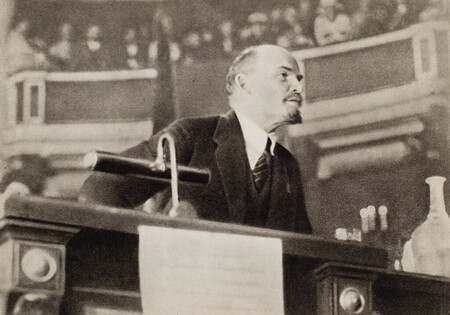
The failed attack against Alexander III is not the only chapter in its biography Vladimir Lenin Which—merit Voltaire—shows that history is, at times, a chronicle that ignores crime. Even when they come in front of him in the middle of the road. In his book Vory: The Law of Crime, Professor Mark Galiotti recalls what is perhaps the episode that best illustrates this. The incident was already recounted in 2006 by the Russian essayist Vitaly Shentalinsky in his denouement against Socrates, and although it amounts to barely an anecdote, it is a faithful reflection of the fooling between the underworld and the future of history, how easy it is to change the course of a century.
On a cold Three Kings Day in 1919, more than three decades after Alexander III had ordered the execution of his older brother and as leader of the already powerful Communist Party, Lenin left the Kremlin to visit his ailing wife, Nadia Krupskaya. The trip was made aboard a brand new black Rolls-Royce, one of nine Soviet leader Gorky collected at his palace in Leninskyi, who in 1921 ordered a 40/50 silver Ghost model with skis to travel with it through Russia’s vast snowy regions. He was accompanied by his sister Maria and his bodyguard Ivan Chabanov on his way to meet Krupskaya.

Crossing a lost street in Moscow, Lenin, Maria and Chabanov come across what appears to be a security checkpoint. when met Rolls-Royce A group of men in uniform interrupts them. Chabanov was suspicious, but Lenin replied that they had to follow orders like any other comrade… even though there were comrades in Russia at that time who could drive cars worth several million American dollars.
When he rolled down the window and looked out, the leader of the Bolsheviks saw a man who was in his late thirties and smiling a crude smile, so cruel that it looked like a fleshy scar cut open with a knife on a face so clean in the Siberian snow. After suffering several exiles, facing tsarists, bourgeois and Mensheviks, and becoming the international leader of the Communists and his entire country, Lenin refused to put up with bullshit.
– What’s going on? I am Lenin.
-So if you are Lenin? — The young man burst out without losing his smile and surprised the most powerful man in Russia — I am “Monaderos” and I rule this city when it gets dark.
A very comfortable Rolls-Royce
“El Monaderos” was actually the nickname by which Yakov Kuznetsov was known in the Moscow underworld – a nickname that Shentalinsky referred to in his essay as Koshelkov – an old acquaintance of the Russian authorities. Although he was only 29 years old, Yaakov was a popular gangster. Tanned in Siberia who in 1919 already had at least a dozen convictions behind him. “El Monaderos” boasted of being the boss of Moscow after sunset, but had no idea who ruled Russia. Lenin’s name sounded Chinese to him. Nor did he recognize his bushy goatee, nor his bald skull, nor his ironic and rebellious countenance. Yaakov had only one objective: to get a good car with which to commit new robberies.
And that brand new Rolls-Royce didn’t even show up.
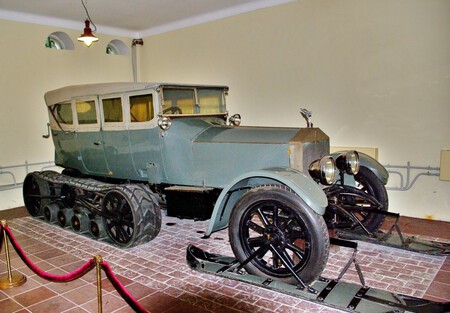
Unaware that they were dealing with the powerful president of the Council of People’s Commissars of the RSFS, Yakov and his henchmen forced Lenin, Maria and Chabanov out of the car and the bodyguards carried some papers and a Browning model pistol. Then left them in the middle of the road. Three of the Kremlin’s mercenaries were stranded in a powerful snowstorm in Moscow, disoriented, unarmed and down on their luck in Russia with a crime rate. As Galeotti notes, by 1918 the rate of robbery and murder in the steppe country had increased ten to fifteen times its prewar levels.
Yaakov was clueless, but he was not stupid. When his henchmen saw the stolen documents from Lenin, they realized who they had stumbled upon. Their attitude was like that of the hooligans of Vorovskoi Mir, the world of Russian thieves: they turned around, although they did not return what they had taken from the leader of the Bolsheviks. Its purpose – related to its author Vory: Criminal Law– was Takes Lenin hostage And a juicy ransom in the pocket. It did not go well for them. Anticipating the move of “El Monaderos”, Chabanov moved the president away from the central route and hid him with Maria to protect him from vandalism.

On Three Kings Day 1919, Kuznetsov thus joined the list of people who could give an unexpected twist to the future of history. Perhaps if gangsters had read more newspapers, the fate of the USSR—and, indeed, the 20th century—would have been different. The anecdote about Lenin’s Rolls-Royce was recorded in the files that the KGB kept on Isaac Babel and Mikhail Bulgakov, two great Russian writers who were besieged by the authorities of the communist regime – after torture and a brief trial, Babel the Great died in 1940 at the Wall of Staurlin. There, Shentalinsky found them decades later while snooping through the archives.
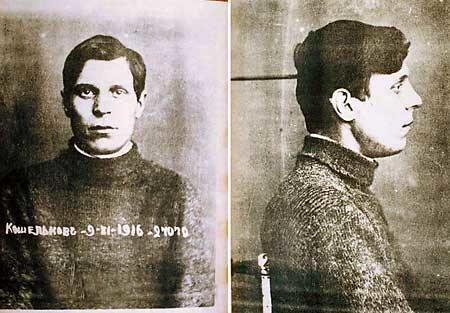
“Purse.”
For the self-proclaimed master of Moscow nightlife, his recklessness didn’t come for free. Russian authorities launched what was – in Galiotti’s words – a “massive operation” to capture the bandit who shot the Bolshevik leader. However, thanks to his contacts in the Moscow underworld and a large degree of cold-bloodedness, Yakov managed to evade for months the dreaded Cheka, the police founded in 1917 by KGB seed Felix Dzerzhinsky and which spared no resource or lack of discipline when doing something deemed “any”. To the dismay of his agents, the Cheka managed to slip into the shadows just as Yakov was about to be handcuffed.
The fate of “El Monaderos” had an expiration date, however. It was exhausted in July of the same year, when it fell to the bottom A hail of bullets. Perhaps if he hadn’t run into Lenin and been a little more discreet with his misdeeds, Yakov could have saved his life. Although the Military Revolutionary Committee made it clear that it would put an end to any thugs responsible for “robbery, shooting or bloodshed” in Petrograd – now St Petersburg – crime was the order of the day that day and in other cities across the country.

As Galeotti points out, Lenin himself developed a definite ambivalence with the underworld. “By identifying the rich and common criminals as the enemies of socialism, it unexpectedly made its potential allies at the exclusion of non-common criminals. This was another deal agreed upon during the civil war that would shape the rest of the Soviet era,” he says. That link, the need for smuggling, and Stalin’s breeding ground in the gulags of Siberia would help shape Vori v. Jakon, the old Russian bandit, brutal and covered in tattoos, who displayed an iron code of conduct.
Yakov, the arrogant treasurer who robbed Lenin, died in 1919, more than a century ago, but not before showing that sometimes history is written to avoid crime.
In Xataka | The incredible story of the tallest building on the planet that eventually became the largest swimming pool in the Soviet Union
In Xataka | Ghost Towns of the USSR: A Journey Through Abandoned Non-Spaces After Communism
In Xataka | In 1964, the USSR had a key mineral to build new US spy planes… and the US cheated to get it.