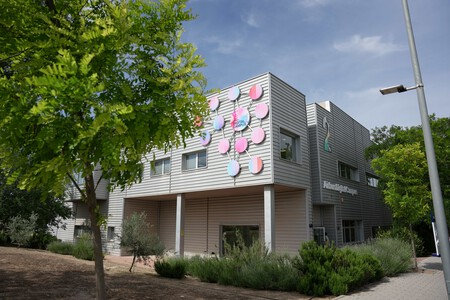
There are cities that try to attract professionals by promising great opportunities. Albacete has another argumentAt least that’s how Airbus describes it in its job offer: a fifteen-minute city, where proximity to services is part of its appeal. A few days ago I had the opportunity to visit it and learned about an activity that is not usually seen in the first image we associate with a helicopter manufacturer. The interesting thing is not only in the facility, but in conversation with those who work there and there was a question: what professional profile has a place in such an organization?
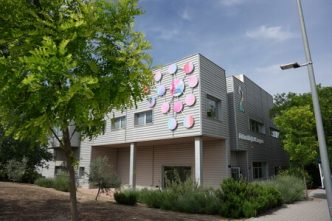
The answer began to take shape on October 27, when I entered the Airbus Helicopters Digital Campus, after visiting its factory in Albacete. Located in the Castilla-La Mancha Science and Technology Park, the center began operations in January 2026 and was officially inaugurated on June 17. Their work focuses on developing digital tools and technologies for the helicopter segment, which I learned about first-hand thanks to conversations with several of their professionals. Among them was Monica Sánchez Ruiz from the automation area, with whom I also spoke about the center’s growth and hiring plans.
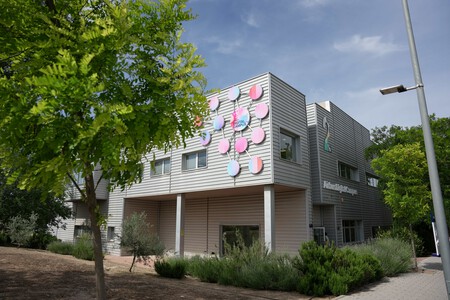
Airbus Helicopters Digital Campus in Albacete Photo: Airbus
When I asked her about growth plans, Monika laid out the stats we just covered: At the time they were working on a digital campus. About 35 people. But the forecast suggests much more: “The idea is that by the end of 2029 there will be about 200 people in the workforce,” he explained to me. The company thus envisages a progressive expansion of the team, although this objective does not mean that there are currently 200 positions available.
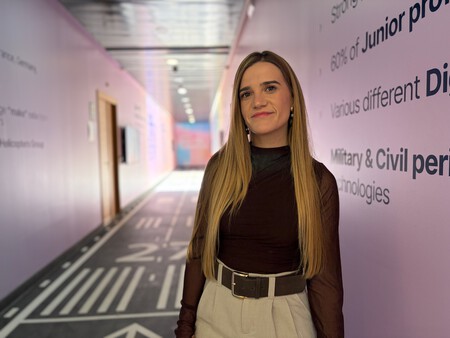
Monica Sánchez Ruiz, Robotic Process Automation (RPA) Developer at Airbus Helicopters Spain | Photo: Xataka
With that objective on the table, a more practical question arose: Who might aspire to work in these facilities? I took the opportunity of the conversation to ask him what kind of professionals they wanted to hire. He explained to me that “quite diverse profiles are being sought” and that the opportunities are not limited to aerospace engineering. The answer is interesting because we are talking about very different specialties, which do not require participation in the design or production of the aircraft. Among the profiles he mentioned were the following:
- Business Analyst (Business Analyst).
- Architect the solution.
- Expert in artificial intelligence.
- Software developer.
Monica later helped me understand another form of automation used at Airbus: software robots capable of performing repetitive computing tasks. Your computer uses UiPath on it Develop these automationsThat’s called RPA, and gave me an easy-to-understand example: collect data from SAP, process it in Excel, and then send the results via email. Previously, he explained, the procedure could take up to five hours; Can now be scheduled to run overnight.
“They’re robots that don’t need to be present. You program them and, for example, at two in the morning they launch and the next day when the worker comes to the office, they’re already there draining them.”
Everything that develops in the digital field does not remain on the computer screen. Carlos López Alfaro, Head of Digital Transformation at Airbus Helicopters Spain, allowed me to use the Microsoft HoloLens 2 and explained how they use it to superimpose three-dimensional images on the helicopter. In the videos he showed us, we were able to see the applications of this technology in painting operations and setting up electrical supports. There is also a detail that links this activity to the campus plan: the proprietary software used in these tasks was then developed in France and Germany, but Airbus planned to extend that work to Albacete.
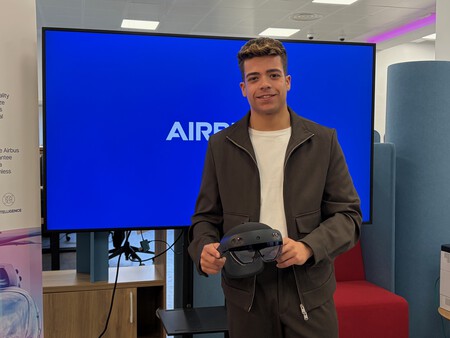
Carlos López Alfaro, Digital Transformation, Innovation and Industrial Cyber Security Specialist at Airbus Helicopters Spain | Photo: Xataka
“We had to use specific templates to place electrical wire supports. Today, and until very recently, they were very manual operations, requiring a lot of operators, requiring very manual work methods. What we’re doing is transforming the form of operation with glasses. What you see inside the glasses is a 3D model.
The center’s activities also cover the protection of the company’s computer systems. During the visit I spoke with Chema Garcia from the cyber security area, who explained to me how from Albacete they collaborate with Airbus helicopter teams from other countries. Identify weaknesses and help correct them. We are mainly talking about corporate computer systems, not software embedded in helicopters, which depend on other fields. When I asked him whether artificial intelligence would reduce the need for experts, he replied: “Now I’d say more in cyber security.”
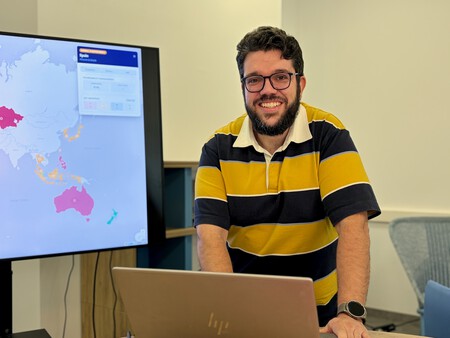
Chema Garcia, Digital Security Lead for Airbus Helicopters Information Systems Image: Xataka
After learning how some of these groups work, another question remains: Are there opportunities for those who have just finished their studies? Monica told me that Airbus maintains a collaboration with the University of Castilla-La Mancha (UCLM) and left a remarkable fact: “60% of the vacancies that are coming out are for young people who have recently graduated.” He was referring to the opportunities that appeared then, not the recruitments that had already been made. He confirmed that the university has external selection processes, so this cooperation is not the only entrance.
At this point, you may be wondering how to take the next step if any of these positions fit your profile. An alternative is to enter Airbus Helicopters jobs on LinkedIn, display offers and Filter by Albacete To find opportunities related to Digital Campus. You can also go directly to Airbus Careers, its official employment portal, where you can check available positions and submit an application.

At the end of the visit, I was left with something that goes beyond the facilities and technology I know: the people who work there. It’s one thing to see the Airbus name on a building and another thing to enter, talk to their professionals and understand what they do every day. Talking to Monica, Carlos and Chema got me to know that less visible part of the company. And there’s something interesting about all of this: those who are part of that group today also had to start at some point. Perhaps among those reading these lines are some of his future colleagues.
Picture | Airbus Xataka
In Xataka | The Miura 5 has entered system-level testing and is aiming for its first test flight in 2027.