

Last night the United States held one of the most shocking elections in its recent history. he Democratic Party Retook control of Congress and the Senate, blocking any legislative path for Donald Trump’s administration and appointing several governors in so-far Republican regions. More pertinently, he swept the Republican Party in traditionally conservative states—Texas, Kansas, South Carolina—and won virtually every demographic group.
It was a “tsunami”. And AI was not exempt.
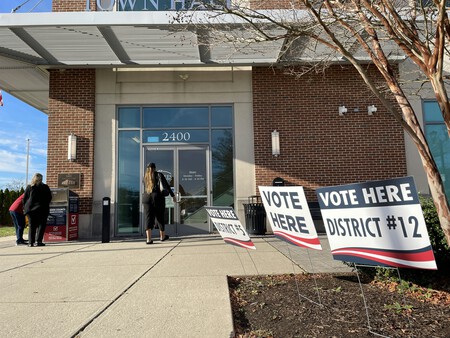
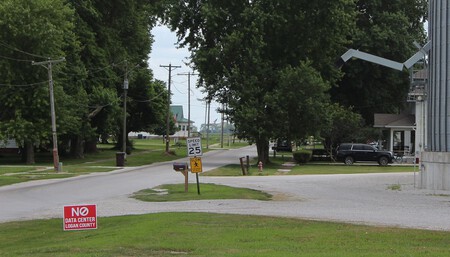
Literally, data centers also ran for office. In the United States, each major election cycle is accompanied by numerous local votes and referendums. Last night, at least 40 localities in 13 different states, according to data collected by Semaphore reporter JD Capelloto, went to the polls to approve or condemn the development of new data centers in their municipalities. The results were unequivocal. With the notable exception of one North Dakota town, data centers have disappeared almost everywhere.
Let’s do some math. In El Dorado, Kansas, a very red state, voters banned the construction of data centers larger than 10 megawatts for ten years. In Urbana, Ohio, one of the most relevant states for the industry in recent years, its residents approved one General suspension For all data centers. Also in Sunbury, Ohio, Amazon broke ground on another $2 billion campus, which is now up in the air. In Emporia, again in Kansas, “high impact centers” were banned.

Most of these referendums were not coordinated. Wherever they were asked, Americans expressed opposition to building data centers in their municipalities with 60%, 70% and even 80% consensus. There is a clear popular sentiment. Four years after the startling AI boom, the industry is losing the battle for storytelling.
Ohio is a notable case because a good portion of the investment is concentrated there. About 50% of the data center systems voted on yesterday — 21 of 41, spread across 18 municipalities — were in Ohio, according to Fortune. Within the state, 125 local moratoriums have already been approved in recent months, driven by popular rejection: 55% of its residents 22% oppose data center construction compared to in favor. 65% are against giving them tax benefits.
The defeat resonates because it comes against a major political and economic effort on the part of the industry. In Ohio alone, Build American AI, an initiative affiliated with Marc Andreessen and Ben Horowitz’s super PAC, spent more than $2.5 million on television ads. They just weren’t the same. According to Citation Needed, various platforms and AI associated with the crypto industry have invested $250 million in this election. In the most contested races, where results were not discounted, the party they supported lost nine of the twelve—most of them Republicans.
They are relevant numbers. The data center industry had a lot at stake in this election. Texas is another relevant example: the race for governor Gina HinojosaDemocrat, and Greg Abbott, Republican, both with rather skeptical positions on computing infrastructure. Hinojosa won, the first Democrat to take office since 1990 and a supporter of an immediate moratorium with dramatic consequences for the sector.

Texas is a hot spot. The US plans to build 43 gigawatts of new capacity through 2027. Current estimates put the installed growth in the country at a range of between 38 GW and 64 GW, depending on the metric used. If we are guided by the S&P report, there were 3,173 operating centers in the US as of the second quarter of this year and 1,140 facilities in the pipeline for 2027.
Well, Texas represents about 27% of all the energy planned in the US for next year and about 30% of the capacity coming into service in 2028. A third of all new national computing capacity is committed to a state in the hands of an anti-data center governor. With cheap energy and an abundance of regulatory convenience, Texas has become an industry darling. Hinojosa’s victory completely changed the calculus.
People just don’t want them
The unpopularity of data centers is so great that even Republican politicians without major ideological opposition to the infrastructure, such as Abbott, the outgoing governor, have already suspended approvals, suspended approvals and promoted audits to monitor the facility’s impact on the electric grid. Arguably, it was already a lost campaign. Opposition at street level is huge.
An exit poll conducted last night by NBC illustrates that popular sentiment is going in the opposite direction of the tech industry’s priorities. For 23% of voters, it was AI and data centers An “important” factor In their voting decisions, another 33% rated it as “important”. In total, 56% of Americans went to the polls yesterday with a very strong, highly developed and generally negative view of AI and the data center. When asked specifically about the possibility of having a data center in their city, 76% were against it.

This is a movement with unexpected consequences for the immediate development of computing infrastructure. According to Brad Gerstner, about 15 gigawatts of the 43 gigawatts of capacity planned for next year are at risk of not being built. 145 projects have already been delayed or canceled ahead of the elections. Data center uncertainty and local opposition are so great that banks already consider both factors as risks when issuing credit.
The Democratic Party has correctly read the sentiment of its voters and aligned itself relatively clearly against data centers. According to Semafor, at least 130 candidates have issued ads in this campaign against the installation or against technology companies in general. His landslide victory in the “mid-term” and his capture of the two legislative chambers are predicted More complicated years For big tech. In data centers we could potentially add stricter regulations for AI companies.
In Strategy, Ben Thompson suggests that the ultimate limitation facing AI is politics: “First we were short on computing power, but that has been resolved; now we are short on memory, but that will be resolved; in a product; “I think it’s just as likely that we’ll face a much larger deficit than expected, with knock-on effects on everything else.”

Beyond its analysis, which is very interesting and which I recommend reading, “Midterm” leaves an unmissable read for the tech industry: There are PR problems. Over the past few years, Sam Altman, Dario Amodei, and other Silicon Valley bigwigs have emphasized the inevitability of a technology that will eliminate millions of jobs, bring us closer to the apocalypse, end the global economy as we know it, and, in addition, place huge data centers next to thousands of people’s homes that are extremely energy and resource intensive.
And all these sacrifices for what? For the first time, this question became relevant in an election and emotionally conditioned millions of voters To date, the AI industry doesn’t have a single best answer. Until you find it, or until you change the message, you will continue to lose elections.
Picture | Nathan Kuzmarski, Ernie Journeys, User: Visviva
In Xataka | The US has problems with its AI data centers: more and more states oppose building them
In Xataka | The only thing the US is building right now is data centers
In Xataka | Hyperscalers have thousands of Nvidia cards sitting in their boxes because they don’t have a place to plug them in