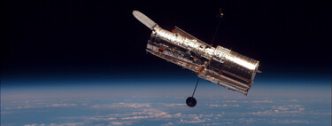
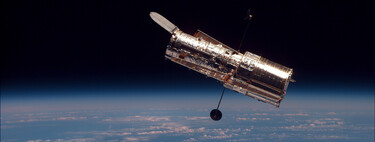
NASA did everything it could to save the Neil Gehrels Swift Observatory from inevitable collapse. Last July, after the space observatory detected imminent re-entry, the Link mission was launched, with the aim of securing the telescope and maneuvering it into a more stable orbit. Unfortunately, the ship that was supposed to do this encountered several problems that caused it to return home without fulfilling its purpose. Therefore, as expected, the swift fell to earth without anyone being able to prevent it. It happened this Wednesday, November 4, in Sumatra and thankfully, no damage was done. At least that is known.
Chronicle of a falling prophecy. The risk of Swift hitting Earth before the end of this year is over 90%. And it was fulfilled. Returning home is unregulated. Exactly where it will fall has not been calculated, although NASA has urged calm, confirming that most of the observatory will disintegrate as it passes through Earth’s atmosphere. During the last days of observation, it was supposed to hit a country near the equator. Finally, it was the United States Space Force that announced the final destination. Swift re-entered the atmosphere on November 4 at 12:39 GMT (1:39 p.m. CET) just over the island of Sumatra.
There is no harm. The announcement was made after re-entry into the atmosphere. There is no record of where the wreckage fell, if at all. Most if not all of it is broken. Some media speak of fragments, which fell without harm. But till now NASA has not made any official announcement about this. Predictions prior to Swift’s return put the risk of a person falling a piece at 1 in 2,100. If there are no reports by now, hopefully nothing has happened in the end.
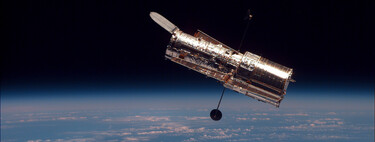
22 years of hard work. Initially, Swift was intended for a 2-year mission. However, the observatory, which weighed 1,450 kg and was the size of a minibus, was able to prolong its mission. For 22 years, he has been providing very interesting scientific information, especially regarding gamma ray bursts.
When atmospheric friction, accelerated by high solar activity, began to deorbit the observatory, NASA shut down some of its instruments to try to reduce drag and keep it afloat longer. Everything would have been fine if Link had completed his mission, but unfortunately that was not possible.
Propulsion failure. A few weeks after launch, the Link began spinning uncontrollably due to two failures, one in its reaction wheels and the other in its cold gas propulsion system. NASA tried to regain control, but failed. The ship returned to Earth without time to send another rescue team to Swift. Faced with this situation, the American space agency chose to restart the observatory’s instruments and hold it until the last moment. A moment that brought about his sudden retirement this November 2026.
Picture NASA Goddard Space Flight Center Conceptual Imaging Laboratory
In Xataka | James Webb breaks another historical record: a supermassive black hole is expected