
One might mistake them for instruments of torture, but Japanese toilet They are a small prodigy of the most eschatological technology possible. Manufacturers like Toto have become the Dyson or Apple of the sector, but these advances have not caught on in the Western world. Even Bill Gates has tried to promote innovation in this category in 2018.
Surely you have heard about them and seen them in action. You may have tried first the toilets that save water, allow you to avoid using toilet paper, which is irreplaceable in the West, and also have many other benefits, such as always being warm when we go to the toilet. With so many qualities, why didn’t the Japanese toilet conquer the rest of the world?
Japanese toilets have been well known for many years. People who travel to Japan have the opportunity to use them again and again because they are everywhere, and in fact a Priceonomics article revealed how in 2012 72% of Japanese homes had one of these toilets. Quartz has more recent statistics: it was 76% In 2014.

The models that appeared in the late 90s have since been called washlets, and they did so as a mix of our traditional bidet and toilet. However, in Japan they wanted to go further, and in addition to combining both functions, they wanted to implement new ones that make the experience of going to the bathroom completely different from what we know in the rest of the world.
For starters, there’s an integrated bidet function that can certainly be scary when using it: a scary-looking tube appears from the back of the bowl and jets of water come out to clean the anus and even the vulva when used by women.
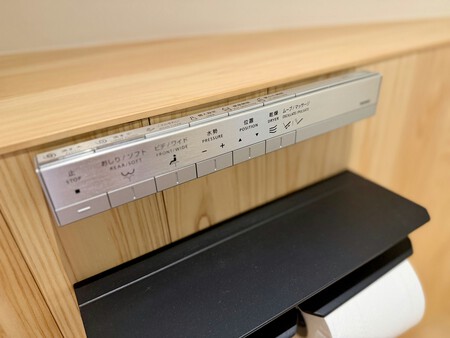
threatening Jet It finally convinces those who try it, especially because it allows a more effective cleaning and avoids the use of toilet paper, although it can be supplemented with this last ingredient. You can adjust the pressure and even the temperature of the jet, as well as the position of a jet, which is surprisingly accurate if you’ve tried it (I did a few years ago).
If you don’t want to use paper, washlets include drying systems with adjustable temperatures, seat heaters, lighting systems (very useful when going to the toilet at night) or even proximity detectors that turn on or off according to the user’s position.
The technological innovations of these toilets did not stop there: Toto showed a few years ago how its system “Tornado flush“A viable alternative to pressing the flush button that improves toilet cleanliness and does so by saving huge amounts of water. The company actually collaborates with academia to evaluate new technologies for flushes where they even use supercomputers to model the physics of water.
Crazy inventions and health improvements
These improvements even affect our health: manufacturers claim that jets help with hemorrhoids and constipation, but in addition, the latest generation of products have sensors that allow us to measure blood sugar based on urine or even pulse, blood pressure or body fat content.
And if you are worried about the bad smell, there is also a solution for that, because the so-called ozone deodorization applied in some models helps to eliminate that problem efficiently and quickly according to the manufacturers.
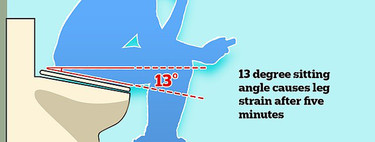
With all these advantages – and we are sure to forget something – what is strange is that this toilet One has not been successful Outside of Japan. The reasons are several, and language is probably one of them. The symbols and texts in Japanese for these cups – if you travel there, you can buy one and bring it back without much trouble – made their use outside the Asian country difficult, but in 2017 Japanese manufacturers reached an agreement to standardize these symbols and texts.
As the UnGatoNipón blog explained in 2016, there are some important reasons for the limited success of these washlets outside of Japan:
- Voltage: 100-110 V voltage is used in Japan, while 220 V voltage is used in Spain and many other countries.
- Sockets in the bathroom: Although it is common to find sockets for connecting hair dryers or other accessories in the bathroom, these sockets are not found next to the toilet.
- Incompatible bowl: The way to anchor the bowl to the main “body” of the toilet doesn’t fit if we use a bowl bought in Japan. To do this you need to buy an adapter that solves the problem, something non-trivial.
There are other drawbacks which are not practical, but social. As noted by some manufacturers such as Kohler or Brondel in the United States, such toilets do not appeal to users because “convincing someone to change their habit of using toilet paper, which has been ingrained in them since childhood, is difficult to say the least.” Engadget’s summary was clear: Everyone smokes, but no one wants to talk about it.
In the Financial Times they talked about another additional hurdle: cost. Most western households don’t invest that much in toilets, and even basic versions of these solutions are expensive.
Despite all this, it is not impossible to access one of these products, and in fact there are Roca company “smart toilets” in Spain that, for example, take advantage of in-wash technology that can be washed with water and have the rest of the functions that are already common in Japanese toilets. The price, however, is quite high, and the official price of the Roca In-Wash is 1,921 euros.
There are alternatives, and it is inevitable not to mention Xiaomi here. A few years ago, the company that we all know especially for its smartphones and electronic devices, introduced a toilet bowl that allowed us to have some alternatives to Japanese toilets in a more economical way.
Since then, yes, Japanese toilets have started to leave Japan. There, more than 80% of homes already have one, and in November 2025 Toto sold 70 million washlets worldwide, with more than 30% of sales outside of Japan and the Americas as markets that grew the most over the past five years. In the United States, sales They are double In 2020, in the middle of the pandemic, although toilets with bidets are still only 2.5% of the total.
The options are there – some are even starting to integrate voice assistants – but it doesn’t seem like outside of Japan we’re very willing to change to a system that seems to satisfy anyone who tries it.
In Xataka | Toto was a discreet Japanese toilet company. Now it has literally struck gold: it makes a key chip component
In Xataka | Cobs, coconut shells and the Roman “thesaurus”: all the alternatives to toilet paper before it existed
In Xataka | There is only one correct way to store toilet paper. A patent ended the controversy in 1891
Picture | John Cameron, Eva Balogh, Upgraded Points