In 1998, an astronomer at the University of Arizona discovered a strange object. Apparently it was an asteroid, but it was moving with a certain acceleration. This makes no sense, since asteroids are like puppets. They move at the mercy of external forces, such as gravity. They may have a small acceleration due to something called the Yarkovsky effect, a thermal force due to radiation from the sun. However, this object, 1998 KY26, appears to have more of its own acceleration than the Yarkowski effect. No one was pulling him. It was long thought to be due to something like a comet masquerading as an asteroid. However, a new study shatters that assumption and adds fuel to the fire of mystery.
Too hot to be a comet. Says a lot RoughlyAsteroids are pieces of rock. On the other hand, comets also have relatively large bodies of ice. This is why they have their own acceleration. The ice sublimates and becomes a gaseous state, propelling itself like a rocket. Comets are usually very good looking, as they leave behind a bright trail, formed both by the ionization of gas and the reflection of sunlight on the dust dragged in the process. However, there are some comets, known as dark comets, that do not have this bright tail, either because they are so small that they emit very little gas and dust or they have very little dust on their surface.
It was long thought that 1998 KY26 might be a dark comet. However, now a team of scientists at the Georgia Institute of Technology has calculated its temperature and concluded that it cannot hold enough ice to accelerate like a comet. Assumptions lose power.
account. To find out the temperature of 1998 KY26, they didn’t take a spacecraft and stuck a thermometer in it. Temperature calculations are indirect, based on models that take into account information known about the object since its discovery. It is known to measure about 11 meters in diameter and rotates once every 5.35 minutes. Its reflections and possible compositions are also known. With all this data, an approximate temperature can be calculated, which suggests that even at its coldest point this object does not drop below -61ºC. For ice to survive inside an object, its temperature must be below -128ºC.
A quick finish. At that temperature, even if the ice is only 1% of the object’s mass, it will be completely lost in 2,000 years. Furthermore, if this loss of ice causes acceleration, it will disappear in 62 years. This object may be billions of years old, although it is not known how long it has been in orbit. Maybe it’s too short a time and you’re still losing ice. Maybe it’s a comet. But there is still information that is not added.
snow line. Models from previous studies also indicate that 1998 KY26 may have formed in the asteroid belt. This would mean that it formed near the snow line, the boundary that separates the areas where an object can hold frozen water and where it cannot. The asteroid belt lies in the ice-free region.
A possible hypothesis. Now that the dark comet hypothesis is on the rocks, scientists at the Georgia Institute of Technology support an alternative hypothesis. This indicates that the acceleration is probably due to the object losing dust grains from its surface during rotation. As happens with gases ejected by comets, the ejected material is what causes the punch.
We will know soon. The good news about all of this is that the Japanese spacecraft Hayabusa 2 is currently on its way to 1998 KY26, so it will be able to get a closer look at its surface and better understand its composition, pointing out the most suitable hypotheses. It’s expected to reach its destination in 2031, so we still have a bit to know, but at least it looks like this space mystery has an expiration date.
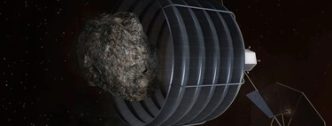
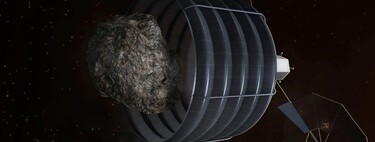
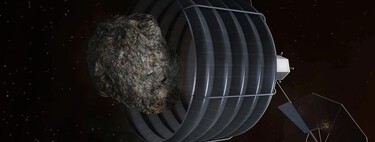
Picture | Artist impression of 2016 WF9, appearance of 1998 KY26 unknown. Credit: NASA
In Xataka | It must have gone from a supposed alien ship to a comet. Now 3I/ATLAS surprises again with another possibility