The simple idea of conquering an entire mountain because you suspect there’s a hidden city underneath is a bit crazy, it’s like digging because an obscure clue tells you the Holy Grail is hidden there. But that’s exactly what Juan Vicente Vegazo Montes de Oca did, a landowner in Ubrique (Cádiz) who, according to this history, bought a hill known as Salto de la Mora.
He did not acquire land to cultivate or to speculate or to leave to his children, but he understood that there was more than stone beneath the rock. He excavated until 1798 and uncovered an entire Roman city. Today it is an asset of cultural interest.
A vineyard as an alibi. The botanist who copied his manuscript dates the purchase to 1792. Guides established it in 1793. Because, according to that text, Benafis was curious about some vestiges that appeared on the land of El Alto. Vegazzo planted fruit trees and then in 1793 he planted a vineyard, not just for wine: every pit and every cellar served to advance his inventions. If nothing appeared, he had grapes left.
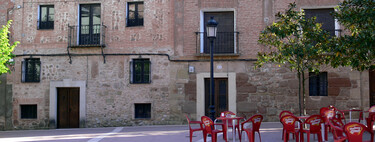
Pompeii on the Hill. And be careful because the comparison has its merits. According to this tourist guide, Vegaso wanted to check if there were any remains of the city and was looking for parallels with Pompeii, whose excavations were beginning to cause a stir in Europe. We are talking about 1792. And Turismo de Andalucía defines him as a true pioneer: he excavated several structures and put his findings in writing, including two inscriptions dedicated to the emperors Antoninus Pius and Commodus. They revealed something that no one knew until then, the name of the city. “Okuri.”
A ghost manuscript. The original, from about 1795, is lost. A copy survives from 1808. Fray Sebastian de Ubrique reproduced 63.5% of the text in his ‘History of the Villa de Ubrique’ from 1944. And the botanist Simon de Rojas Clemente, who passed through Ubrique in August 1809, commissioned his co-correspondent to write a history of Gradana. He then corrected them on the spot.
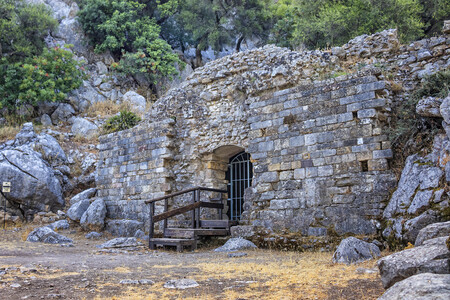
what was underneath. The city originated as an Iberian settlement in the 6th century BC or earlier. It reached its zenith in the 2nd century AD, having already merged into the “Conventus Iridicus Gaditanus” of Betica. Among its ruins is a cyclopean wall, built of massive blocks raised from bone, without mortar and rebuilt on several occasions.
They also installed large cisterns to collect rainwater, a forum with the remains of inns and houses, and some hot springs with views of Grazalema. Outside the walls, a mausoleum with niches for urns was built, in accordance with Roman sanitary regulations. Vegazo took it for a bath and the common people called it “Mosque”. The stratigraphy of the site ranges from the Bronze Age to al-Andalus.
More people in the vineyard. Vegaso didn’t dig alone. In less than 1 year, the history academic Domingo Tragia, who occupied the walls by the work of the Moors, and the priest Simon de Zamora, among others, rose to see the ruins. Abbe Masdeau published the inscriptions in 1800. The first identification of the headless figure as Commodus appeared in a September 1797 letter from archaeologist Andres Palacios.
He puts on his boots. Vegazo removed many of the original slabs from the forum to decorate his own house, according to the same guide, and remnants of that house can still be seen at the site. He destroyed a mosaic to bring down the soil. In another letter of 1798 he admitted that he only kept 12 coins; The rest remained there. According to Urbipedia, most of the objects found, including statues and valuable coins, have been lost. In the 19th century, an old man from Ubrik told a scholar that one of the stone heads ended up as an apothecary’s mortar. Part of the loot is still being sought.
More than 200 years later. Okuri had to wait his turn. In the 70s, the work of the teacher Manuel Cabello Janerio was the key to its recognition, and the excavations of Salvador de Sancha showed that several cultures settled in the mountains. Later, the Commonwealth municipalities of the Sierra de Cádiz undertook the consolidation of the wall, work documented since 1997. Archaeologist Luis Javier Guerrero Misa, author of several studies on Ocuri, considers Vegazo one of the pioneers of Andalusian archaeology.
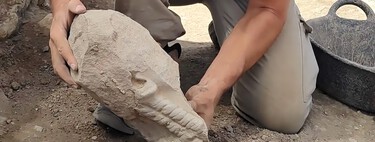
His big moment. It came in 2024. The University of Granada team confirmed another Vegazo hypothesis: that the central terrace of the hill was the Forum. When they arrived, only a possible closing wall was visible, 1 meter high and about 16 meters long. Below, the bases of columns and remains of shafts and statue pedestals, characteristic of large public buildings of the Early Empire, appeared. North African ceramics extend the occupation beyond the third century AD and point to trade routes connected to the Campo de Gibraltar. The foundations of possible medieval defensive structures have also been found.
Government seal. Okuri was registered in the General Catalog of Andalusian Historical Heritage as a resource of cultural interest with a typology of archaeological zones. The resolution was published in BOJA on April 5, 2022. Today the enclave has a tourist map, a visitor center and guided tours of the streets that Vegaso is beginning to discover. It also suffered from graffiti-like vandalism in 2014. In any case, the walk can be done in one morning and is great.
Illegal today. A few lottery tickets have yielded many things: a city with a name, a forum, hot springs and more than 2,500 years of history. Of course, what Juan Vicente Vegazo did today would be a crime: Law 14/2007 requires prior authorization for archaeological activities in Andalusia, and Article 323 of the Penal Code punishes site looting.
Cover image Ubrique City Council / Lebeauserge.es
In Xataka | The “Clay Rome” of Hispania loved board games and wine. We know thanks to a mysterious site in Aragon
In Xataka | The fire of Notre-Dame in Paris: they only wanted to rebuild it and shade it with trees, returning the land to Lutecia