It’s interesting how conventional defenses seem to be going against the automobile market status quo. What until recently seemed the most logical, what has always been done has become a counter-current trend. A person who is committed to working naturally is a more than relevant position in one of the most traditional companies in the Spanish and automobile market.
He is Alejandro Masonero-Romanos and he is very clear about what he does with car screens.
“Let them buy something else”. “I’m aware that a large part of the public wants to get a bigger screen, but don’t buy an Alpha, buy something else.” Simple and direct. This is how Alejandro Masonero-Romans showed himself the coachIn an interview where he clarified his stance on the huge screen size and their prominence.
“I’m sure there are a lot of people out there who think like us. There’s a lot of people who will be happy with this experience,” added who believes that screens are interesting when you’re driving but not so much when you’re driving.
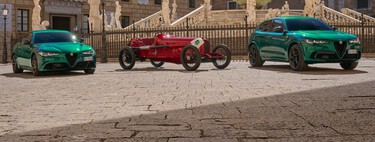
A change? The Spaniard is clear about Alfa Romeo’s strategy and use of screens: “We will get rid of them.” It’s a risky proposition in our time but it’s true that the Cuorrosso presented at the Paris Motor Show, the prototype and the one that will drive the company’s future, comes with only two clocks for the instrument panel.
Masonero-Romanos, in fact, has been pointing out for some time that flooding the interior with curtains is not the ideal formula. When BMW was presented with the panoramic vision of the iX3, in the Coches.net podcast they remembered that the Spanish designer had already presented them with a very similar concept that, however, did not make it to production.
The aim, therefore, is to leave the screens in a small area at the bottom of the windshield but limit their impact. And in BMW, although they maintain a huge screen, the truth is that it loses relevance when we drive.

The reason? The Spanish designer is clear that “we are in a kind of centimeter war for screens, and for me it doesn’t make sense, because they have become huge. Basically, they are designing a tablet for you. In a few years, these screens will be obsolete, they will be old, they will start to cost money.”
And, moreover, it has a purely ergonomic reason: “You have a screen that you don’t put anywhere else. And I prefer to put it anywhere else.” This way of thinking is almost revolutionary in an industry where everything seems to be brought to the screen, many brands have installed there air conditioning functions, Tesla has brought the fog light activation to the screen, and it and other companies have brought physical buttons to the screen. warning Up to the ceiling and even changing gears.
Yes, but. The point is that consumers seem content with giant screens. All sorts of companies have joined the trend, including those that oppose it, such as Mazda. And it’s not just the Mazda CX-6e that’s actually a car of Chinese origin, the Mazda CX-5 has also joined the big screen bandwagon.
These brands and others have confirmed to us that their market research confirms that consumers want bigger screens. A screen of good quality and good size quickly connects with “modernity”. And in the end, the manufacturer gives what the customer wants.
a hope. For those of us who dream of being a pendulum and returning to moderate screens and even analog instrument panels, there is a loophole to keep dreaming. These words of Alejandro Masonero-Romance have reached our ears.
Especially when Porsche just introduced a Mission S that opts for a needle on the instrument panel to combine analog-digital in the same place. And hopefully that resonates with other designers, like Bugatti’s design director Achim Anscheidt, who also expressed his displeasure with the trend, saying that as the car ages, an old screen deepens the idea.
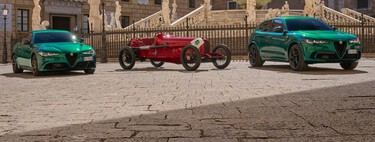
Picture | Alfa Romeo
In Xataka | I bought this car for one simple reason: I’m tired of giant screens