On October 2, 2022, a diver photographed a female blue crab walking on the sand in San Antonio de Portmany, Ibiza. It was missing a clamp and was 16 cm wide.
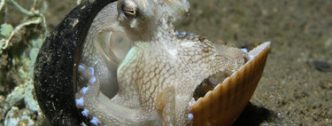
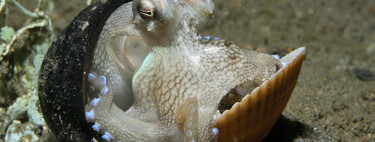
An hour later, the crab passed by the same spot again, but it was not alone. An octopus weighing about 850 grams covers him with its arms. In just 15 minutes, only a piece of shell and another claw remained on the sand at the bottom of the sea.
It may seem like a curiosity, but it is much more: it is one of the first three Mediterranean records of an octopus hunting a wild blue crab.
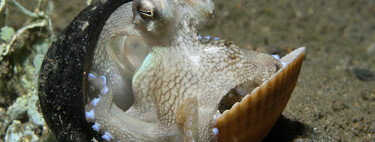
What is so interesting about all this? What is interesting is not that an octopus eats a crab, but the size of its prey. As far as we know, the common octopus usually preys on small crabs. In fact, prey larger than 10 cm in shell width are rare even for larger, stronger octopus species. And those that have been documented are crabs much larger than 10 cm.
The problem here, the researchers realized, was that the oddities didn’t stop there: all the victims were women.
And so? It’s not obvious, but the answer suddenly appears, and it’s easier than it seems. Octopuses and crabs do not live at the same “height”: the latter live much lower than the former and there is only one moment where they intersect: when the females rise to spawn. That’s when the octopus hunted them.
But why? I mean, why now? If this was something ‘normal’ (and, believe me, female crabs have had a bad habit of coming to spawn over the years) we should have seen it earlier. And we haven’t seen it. Furthermore, we were convinced that there were few documented natural predators for blue crabs in the Mediterranean.
At least, that size for crabs. Italy has already released thousands of baby octopuses to crabs, but the assumption was that they would eat the young ones. It changes things.
However, I don’t want to confuse. The main question is why now and not many possibilities: that there is a lack of food.
The Mediterranean is on fire. The Mediterranean Sea has been experiencing record heat waves for years and this has weakened ecosystems throughout the region. This is “less food” and therefore octopuses take more risks to find food.
We don’t have clear evidence, but we don’t have much doubt either: octopuses aren’t just eating, they’re sending us a warning signal.
Picture | Meresa Chartrand
In Xataka | We knew that octopuses are very intelligent. But not to the point of having a “brain” on each arm