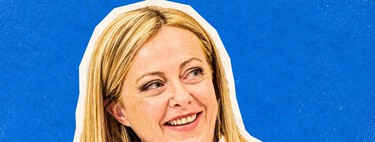
A photo of someone who looks like you but isn’t you (like that embarrassing trend of undressing women with Grok that went viral
Several celebrities have already taken action and turned to trademarks to protect their image and voice: Matthew McConaughey has already been granted registration and Taylor Swift has filed an application, according to Forbes. But what about ordinary people? Denmark has introduced a bill to make such copying illegal without permission.
My image and my voice, my right. What the Nordic country wants is to make it illegal to promote realistic digital imitations of a person’s face or voice without their consent. As? By reforming intellectual property laws that protect both anonymous citizens and artists. At the moment, it is a project in progress, but the ministry wants it to be operational by early 2027.
Why is it important?. Because for some time the human eye is not reliable in discerning what is a real image and what is not, it is actually very easy to make a deepfake and very hard to detect. Automatic detectors are also no panacea: there are benchmarks that show that based on real deepfakes in social networks, the effectiveness of open source models drops by up to 50%.
What Europe is doing against deepfake. In fact, according to Article 50 of the EU’s AI law, the entire EU has been demanding to label deepfakes since August 2, 2026, under the threat of a fine of up to 15 million euros or 3% of global turnover. But Denmark goes a step further: it gives every person the right to say no.
It’s not the only state to add an extra layer of protection: France bans sharing a person’s AI-generated content without their consent when it’s not clear it’s artificial or directed. In the United Kingdom, making or soliciting intimate deepfakes without consent has been a crime since February, and sharing them can lead to up to two years in prison.
details. In fact, this reform will have two layers of protection: one against realistic digital imitation of general personal characteristics and another specific to artists and performers. Caricatures, parodies, satires and criticisms of power and society shall be excluded.
Denmark’s culture minister, Jenia Stamp, explained that one of the main objectives is to quickly remove manipulated content to minimize damage to large tech companies. And the Reformation does not regulate the creation of these imitations, but their propagation: it seeks to stop their circulation.
made the law. The enactment of this reform of intellectual property law is ultimately good news for people’s rights, but it does not guarantee that it will work. In fact, the compulsion to label deepfakes has appeared in the same situation: either because of exceptions or because everything is indicated, it practically disappears.
In this case, its effectiveness will depend on how fast the removal is, but that requires detection first, and as we’ve already seen, that’s not something that’s reliably done by humans, not by machines. On the other hand, and although it is a law that applies to the sovereign territory of Denmark, the Internet knows no borders.
In Xataka | The biggest expert on AI imitation has lost hope: “In a year or two, our entire visual system will be useless”
In Xataka | The level of sophistication of AI images is such that we now literally need expert techniques to discover them
cover Imoberg