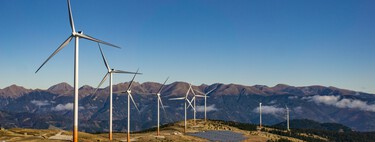
Something is changing in Aragon. At least, in the landscape. Muel Wind Farm (Zaragoza) replaced 27 old wind turbines with three of the latest generation with an installed power of 19.97 MW.
It is one of the first offshore wind projects in the region to undergo such an ambitious modernization plan. The revitalization process began in 2025 and ended with the opening of the new park later that year. On October 8, 2026, its new stage was officially celebrated.
At the end of its useful life. After providing power for a few years, the original 27 turbines that were installed in 1997 with a combined capacity of 16.2 MW will reach the end of their useful life in 2025. The balance of nearly three decades of production has totaled 800 gigawatt hours, according to RWE Renewables Iberia, the company that owns the company.
This re-energisation project received funding from the Recovery and Resilience Facility through PRTR/NextGenerationEU, as well as considered Exemplary initiative For its positive impact on the local economy, cited by the Herald.
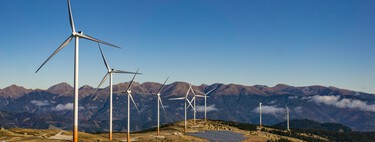
Fewer units, more power. Now, these old units have been replaced by only three new turbines of 6.6 MW each, with a total installed capacity of 19.97 MW. Each new turbine has about 11 times the power of the old turbine.
RWE assures that the production will allow it to supply around 9,400 homes to around 21,000 homes. As El Español reports, production has increased by more than 50% and, at the same time, the ecological integration of the park has been improved and its landscape impact reduced.
Environment is one of the main factors. Precisely the environmental impact is one of the most controversial aspects of the energy transition. Although the benefits it creates as a source of clean energy are undeniable, a wind farm inevitably changes the perception of the natural configuration of the landscape and environment, with a large-scale visual intrusion. Wind turbines can easily exceed 100 meters in height and their continuous movement can create unwanted effects in nearby cities, such as, for example, Shadow flicker– A shadow flickering effect that can be quite annoying.
Hence, the reduction of such units in the mule can contribute to mitigating that less friendly aspect of the energy transition.
Not everything ends up in scrap. Another good news about this ‘renewal’ is that, according to RWE, it will be dismantled according to circular economy and zero waste solutions that will recycle a large part of the materials. The company that will manage it will be RainerCycle and will be in charge of refurbishing 1,350 old components that will be used in other RWE wind farms. They will also recover 1,825 metric tons of ferrous material and will be able to recycle 95% of the material.
As for the blades, they will be recycled at ACCIONA, ACCIONA Energía and RenerCycle’s Waste2Fiber® wind blade recycling plant through a pioneering heat treatment technology that will allow the fibers to be reused in various industrial applications.
Picture | RWE
In Xataka | The world’s tallest wind turbine has a serious problem: No crane can reach it to top it off