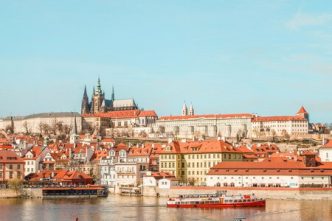
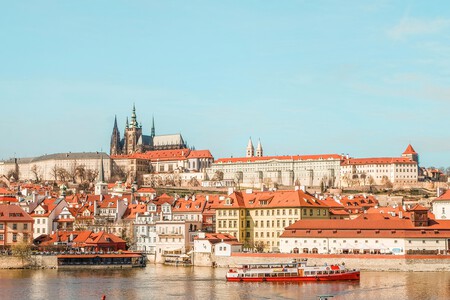
Although in some places it has reached the influence of Spain, where it has made an electoral breakthrough, the housing crisis is not an exclusive problem for our country. Cities across Europe are suffering from rising prices, housing shortages and land shortages. It goes from London to Athens, via Paris, Berlin or Lisbon. Also in the Czech Republic, which has a 10.4% increase in consumption per m2 in 2025. In its capital, Prague, they developed a formula to smooth out this structural imbalance without building in the city or height.
The key is in his art past.
“A Perpetual Imbalance”. The quotation marks come from the European Commission (EC), which in its recent report on the Czech Republic’s economic and social challenges identified a well-known problem in Spain: the housing crisis. More specifically, Brussels identifies a “persistent mismatch between strong demand for housing and limited supply”, which is driving up prices and complicating accessibility. Community analysts have even warned that this cocktail (nothing like what happens in Madrid or Barcelona) is reducing labor mobility.
“The problem is even more serious in big cities, affecting both sales and rental prices. These events have wide-ranging repercussions, increasing housing affordability, hindering labor mobility, deepening inequality and complicating access to financing for innovative companies,” the EC added. This reality is evident in Prague, a city of about 1.4 million inhabitants that attracted 8.3 million tourists last year, 3% more than in 2024.
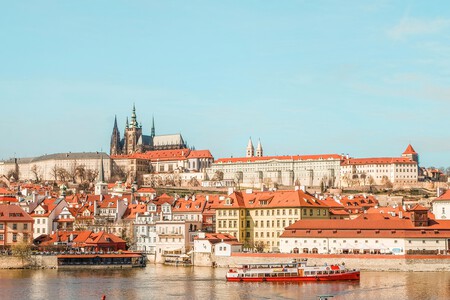
Alice (unsplash).
So expensive city? To answer this question, it is good to take a look at the ‘Mapping the World’s Prices 2026’ report, an analysis by Deutsche Bank that compares the cost of buying a residential m2 in 69 city centers around the world, 28 of which are European. Although the Czech capital’s standards are much lower than those of Zurich, Genoa, London or Paris, the continent’s most banned metropolis, Prague, appears in the top 15. It is surpassed, for example, by Madrid, Berlin, Rome, Dublin or Lisbon. Buying an 80 m2 apartment in the center costs 668,200 euros, compared to 626,500 in Madrid or 518,700 in Barcelona.
How to fix it? increasing supply. As I remember Economist In a recent report from Prague, in 2025 the Czech capital started building only 7,400 houses and completed 5,300. Data for the second quarter of 2026 show an acceleration in this pace, but the sector faces the daunting challenge of correcting a housing shortage that some experts estimate at 91,000 apartments. The same analysts estimate that the city would need to build at least 10,000 homes a year to cover this.
The million dollar question is… how to grow residential parks? Should Prague resign itself to the uncontrolled expansion of city limits? Is it your turn to review height limits and build skyscrapers? In the Czech city they took another route that takes advantage of two things: its recent history and its peculiar urban fabric. For some time, Metropolis has been developing a plan that seeks to build thousands of apartments on abandoned industrial land.
One digit: 10,000 million. A few days ago the Bloomberg company analyzed this transformation in detail and came to an interesting conclusion: the Czech capital is experiencing an urban transformation that can go back decades and reach 10 billion dollars. The point is not to expand to the outskirts or add floors to existing buildings, but to transform former industrial centers into neighborhoods with homes, parks, mixed-use buildings and wide boulevards. All with the help of private investors.
In the spotlight are old railway stations, factories and disused warehouses. “It’s not about adding a lot of new layers,” Martin Orednikek of the Department of Social Geography and Regional Development at Charles University in Prague explained to Bloomberg. “It’s about taking advantage and transforming parts of the city that were left behind after the industrial age.” Prague faces a complicated calculation: It builds about 5,000 new homes a year, half of what it actually needs, according to its planning institute.
From theory to practice. Not everything is a theory or a statement of purpose. Prague has already hosted some ambitious projects that help understand the depth of this transformation. Of all, perhaps the most interesting is Bubni-Zatori, which aims to transform the area around a disused railway station in Bubni into a neighborhood with 11,000 apartments for about 25,000 people. In addition to residential buildings, plans include a park and a new headquarters for the Czech Philharmonic. According to IPR Praha, the project is targeted for completion in 2040.
Bloomberg cited other examples, such as Florenc21, a $920 million project that seeks to create a green and pedestrian neighborhood. Where? Located in one of Prague’s main transport nodes in a now disused space. Something similar is happening at Smichov, an old freight station. In theory, its resurgence should be ready by the middle of the next decade with a broad boulevard, offices, businesses, hospitality… and apartments.
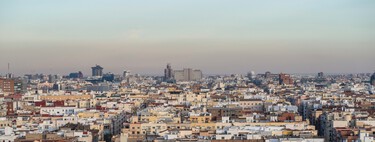
Opportunities and challenges. Prague is not the only European city with large areas that once had industrial or logistical uses and are now unused. The Czech capital, however, benefits from a peculiar setting. As Bloomberg recalls, its recent history, marked by the end of communism and the transition to democracy, explains why the urban development promoted in other European cities in the 1960s was put on hold in Prague. Reasons: Legal difficulties, doubts about land ownership and complicated bureaucratic procedures.
Such a cocktail has lost the interest of foreign investors. That has changed. The city’s urban planning framework has recently been updated, paving the way for taking advantage of abandoned land and increasing housing supply. Of course, this is not all the advantages. Much of the plan relies on private investors not requiring part of their development to be reserved for affordable housing. Furthermore, another question remains: How much will the new residential areas increase the pressure on the city’s infrastructure and public services?
Picture | Anthony Delanoix (Unsplash), Alice (Unsplash)
In Xataka | Moroccans outpace Europeans in buying homes in Spain. They also pay less per square meter