Astronomy has evolved a lot in recent years. More diffuse and distant objects can be captured, but everything has a limit. To go further, telescopes need to be able to collect more light. This is achieved with larger telescopes, but, technically speaking, it is something that has a limit. That’s why science is focused on finding ways to combine light from many small telescopes into a single signal that instruments can manipulate. An international team of scientists led by the Institute of Astrophysics of Andalusia (IAA) aims to do just that with their photonic flashlight.
Seven telescopes as one. Photonic flashlights are fiber optic components that are used to adapt two types of fibers. Typically, they are used to split light from a single optical fiber into several independent signals. However, these scientists managed to do just the opposite: combine signals from seven optical fibers. The result can be used to power any instrument that normally uses the light captured by telescopes to obtain information.
In laboratory tests, it has been possible to preserve more than 90% of the original light, so it will be a very useful tool for observing faint objects.
Multimode to multimode. This is the first demonstration of a photonic flashlight capable of combining seven multimode optical signals into a single, multimode, signal. Being multimode means it can support many light patterns simultaneously, making it suitable for processing light distorted by interaction with a turbulent atmosphere.
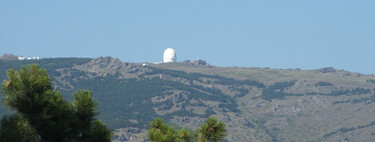
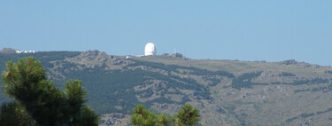
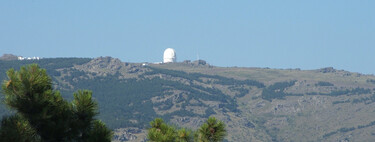
Photonic E-MARCOT. This is the name of an international project within the framework of which this study has been carried out. Its purpose is to build a large aperture telescope, equipped with several telescopic units, whose light is combined into one. At the moment, its demonstrator, called MARCOT Pathfinder, is located at the Caller Alto Observatory in Almeria, so that’s where the light is collected for experiments.
An international team. Although the research is conducted by the Institute of Astrophysics of Andalusia, with a demonstrator based in Almeria, the work is carried out by scientists from two other foreign centers: the University of Sydney and the Leibniz Institute for Astrophysics Potsdam.
More applications. All of this may have many applications in astronomy, but it can also be useful without leaving Earth. For example, in a press release from the IAA, the researchers noted that it could be useful in other areas of photonics, such as optical communication, remote sensing or optical sensors.
This is actually a very common thing in space technology. Many inventions in our daily lives, from mobile phone cameras to the infrared thermometers we use when we’re sick, were developed or inspired by space. It is true that a lot of money is invested in space, but a portion of that investment comes back to our daily lives. Telescopes based on photonic flashlights can take us to places in the universe we don’t know about, but they will also have applications outside of our living rooms.
Picture | The MARCOT-Pathfinder telescope, located at the Calle Alto Observatory, during a night of observation. Credit: Javier Flores (CAHA).
In Xataka | We have been studying TRAPPIST-1’s planets for years with high hopes. James Webb just knocked it down