

In 1922, the Soviet Union built a steel tower in Moscow intended to rival the Eiffel Tower in Paris. That mass survived Stalin, World War II and the disappearance of the country that produced it. More than a century later, its future is in the hands of Russian authorities, who find it too expensive to restore and are considering dismantling it to build a new version. Yes, Russia is willing to preserve the concept of its greatest engineering industry, even if it means destroying it to do so.
Soviet Eiffel Tower. Shukov Tower, located south of central Moscow, was commissioned by Lenin and completed in 1922. Designed by engineer Vladimir Shukov, it reaches 148 meters and is composed of a succession of hyperbolic interlocking steel structures.
Its function was to transmit radio signals across Soviet territory and symbolized the new communist state’s technological ambitions. The lightness of its design makes it a reference to modern architecture and a symbolic response to the Eiffel Tower inaugurated in Paris in 1889.

A century of resistance. The structure withstood Stalinist purges, the German invasion of the Soviet Union and the fall of the regime in 1991. Its deterioration came in much less spectacular ways due to decades of inadequate maintenance. It was last drawn in 1964 and essentially fell off the air in late 2001.
There was already a plan to destroy it in 2014, stopped by protests from Russian and international experts. Three years later it was proposed to dismantle the upper sections with a helicopter to restore them in a workshop and repair the lower sections in the field. That intervention was never done.
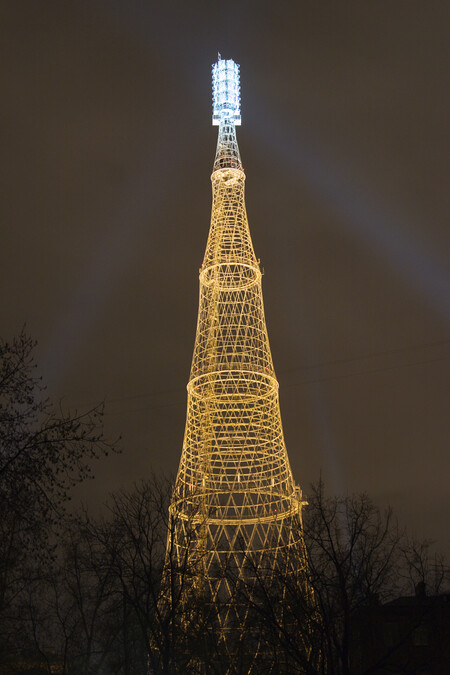
Tear down to rebuild. Now, the New York Times reports that the Russian Ministry of Culture has amended the monument’s heritage protection conditions, allowing it to be completely demolished without the need to preserve all of its original elements. The Russian Television and Broadcasting Network, which owns the facility, maintains that the steel is badly damaged and that it would be economically unviable to restore it.
Recovering pieces that could be used in their proposal and building a new tower inspired by Shukov’s design. Detailed plans have not yet been made public, nor has it been explained how much of the operation’s historic elements will survive.
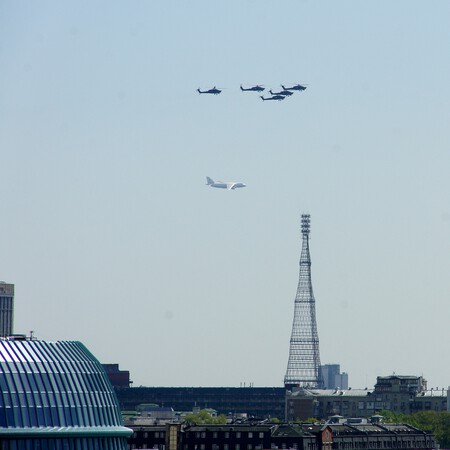
Historic Preservation Bill. Malik said the restoration options studied would cost billions of rubles and the damage could skyrocket the budget, which is difficult to assess. Historian Airat Bagutdinov maintains that this uncertainty had a decisive influence on the choice of secession.
Plus: The decision comes in a context where Russia plans to devote more than $200 billion to defense next year, while other items are cut. Indeed, the contrast has fueled criticism of the Kremlin’s budget priorities.
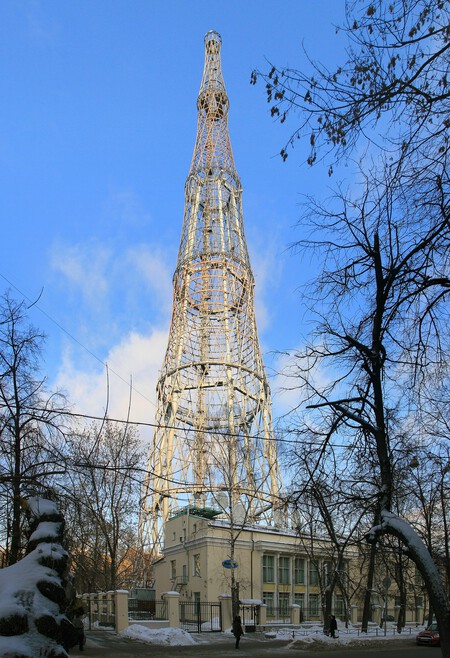
Architects’ Revolt. The Times explained that Russian and international experts have sent an open letter to Vladimir Putin calling for the project to be stopped and the actual condition of the structure to be reviewed. The signatories argue that recent studies indicate that much of the original steel can be saved.
Among those who question the replacement is Barry Bergdahl, an architectural historian at Columbia University, who notes that the French Eiffel Tower has been restored many times without needing to be replaced with a copy. For Shukhov’s defenders, reproducing the silhouette with modern steel would destroy an essential part of the monument’s historical value.

An irreplaceable work future. The schedule, communicated by Russian authorities on October 22, foresees the preparation of work this fall, with the demolition of the upper section beginning in early 2027, followed by the removal of the other five sections.
Those responsible for the project, for their part, assure that they will try to preserve as much of the original material as possible, while conservationists fear that much of it will be replaced. Thus, after more than a century of political upheaval and war, the Shukov Tower faces a different and unexpected threat: that its silhouette will persist while many of the authentic works that made it famous disappear.
Picture | Sergey Norin, Maxim Fedorov, Evtorov, Ludwig14
In Xataka | Taxing every open door and window for 126 years, France pushed citizens to transform their homes in ways that are still visible today.
In Xataka | In 1922, an American engineer built a house with more than 100,000 newspapers. 100 years later, the paper walls still exist