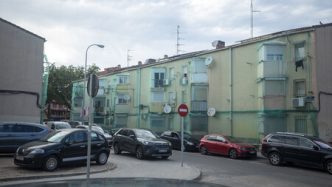
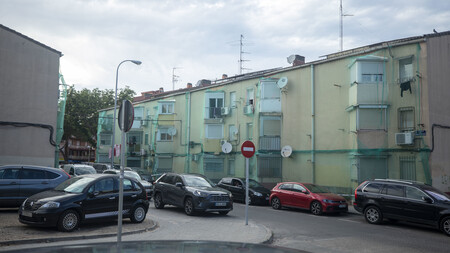
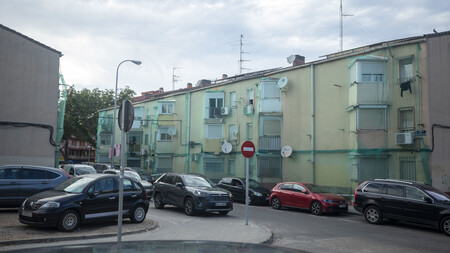
Damp darkens common areas, cracks that divide the building into two, two-meter ceilings and unpaved streets. According to El Pais, about 800 people live like this in the experimental colony of Villaverde, south of Madrid.
Architect José Luis López, who advises residents and says he knows of more than 100,000 public housing units in the capital, is not shy: “This is the worst neighborhood in Madrid.” He justifies this with three details you don’t see anywhere else: low-grade portals, asbestos roofs and lead pipes. The city council has already classified these houses as substandard housing.
context: The Experimental Colony’s 408 apartments, described by El Pais as “vertical shanties”, were born in 1957 as temporary housing. They sheltered about 1000 people. As of early November 2026, they are still awaiting demolition. They were built next to factories like Marconi, Standard Electrica or Barreiros.
It was promoted by the Obra Syndical del Hogar to welcome a section of immigrants from Andalusia, Extremadura and La Mancha to Madrid. But 28 three- and four-story blocks of various typologies (hence “experimental”), some with only 28 square meters of floor space, could no longer hold.
Tenant to Owner. Many tenants offer a form of rent as deferred access to the property, with an obligation to purchase at the end. In 1984 the apartments passed to the Community of Madrid, which inherited the conservation responsibilities of one of the owners. The city council reprimanded him in 2017 for not rehabilitating the homes.
In 1994, Ivima put most of them up for sale, and many residents ended up owning homes that were already deficient. Today almost everything is privately owned, and community social housing agencies hold about 10%.
Decades of protest. The first ones are from the eighties. During Alberto Ruiz-Gallardón’s mandate, neighbors chained themselves to the IVIMA office. In 2014 the Neighborhood Commission decided that rehabilitation was no longer worthwhile and called for demolition and construction of new and larger apartments. In 2016, the city council initially approved an interior renovation plan and in 2017, with Manuela Carmena, added a protocol with at least 30,000 euros per house.
Years have passed and reparcelling was approved in April 2020, but the procedures have not been translated into action. The neighbors also maintain that Madrid’s Superior Court of Justice agreed with them in some cases, although executions were halted.

The plan. In September 2024, the City Council set the scope for extensive renovations: demolish and rebuild 28 buildings in Villaverde, with 88% of the costs to be borne by the City Council, the Ministry of Communities and Housing. The first phase will affect 36 homes in three buildings on Monterde and Escandon streets.
On October 19, 2026, the Community Governing Council approved the agreement for that phase. There is about 5 million euros to replace 36 houses with others with an energy rating, including temporary relocation to the area and distribution to their owners after completion. It is assumed that the Municipal Housing and Land Company (EMVS) will receive 455,232 euros to carry out the action and the project is co-financed with the State Plan for Access to Housing 2022/25.
833 euros. Neighbors have been offered 833 euros for temporary relocation, an amount they consider outdated. Right now, an ideal home in Madrid costs around 1,864 euros per month, according to August data from Idealista. Neighbors say that even finding an apartment in Villaverde for less than 1,000 euros is almost impossible. Furthermore, the prospect of renovations has attracted investors and real estate companies who have bought into the area and rented at prices close to that range, according to El Pais.
Juan Duran and Manuela Quintana, ages 71 and 69, who already went into debt to buy and renovate their apartment, fear having to do it again. They want to move back to the neighborhood where they raised their children, but they don’t know how they’ll pay for the move or where they’ll live during construction.
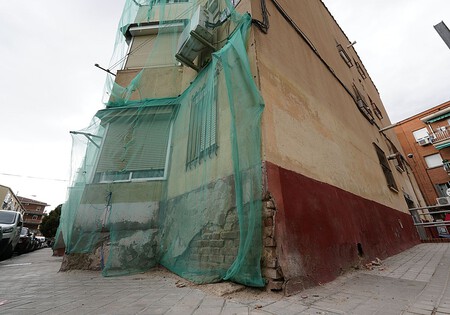
live like this The most everyday problem is humidity. The WHO concluded in 2009 that people living in damp and moldy buildings are at increased risk of respiratory symptoms, respiratory infections and asthma, particularly common in poorly maintained homes. Reviews also indicate a causal relationship with worsening childhood asthma.
With lead from pipes, the concern is tap water: according to the WHO, there is no safe level of exposure, and young children and pregnancy are the most susceptible. The legal limit for taps is 10 micrograms per liter until 2035 and 5 thereafter. With asbestos, similar: in good condition it does not release fibers, but it does when it is degraded or manipulated, and the diseases it causes (asbestosis, lung cancer, mesothelioma) take decades to appear.
So? The neighborhood association, chaired by Ana Alonso, wants King Felipe VI, Isabel Díaz Ayuso and José Luis Martínez-Almeida to walk down the street and enter the house. Meanwhile, despite reports from the likes of Clarin or El Pais, how 85-year-old Juan José García paid a 96 euro garbage fee, trash continues to pile up on some dirt roads.
Picture | Flickr / José Ramón Ladra for ABC
In Xataka | After 40 days, most of the Puerto del Sol campers decided to move. They already have relief: ‘homeless’ associations