

The war in Iran is set to shake up the global tourism market, something the sector has felt since almost the same day Washington and Israel deployed their ‘Operation Epic Fury’. And that’s normal. The conflict has not only increased fuel prices and, in general, the cost of living. In its first phase, it knocked out part of the airport’s activity in the Persian Gulf and the operations of terminals in Dubai, Doha and Riyadh, affecting both tourism in the region and the flow of passengers who usually fly from Europe to Asia with stopovers in the Middle East.
Now we know that this scene has led thousands of European families to think of another quieter area of the planet to enjoy their vacations: South America.
“Incredibly Strong”. Latam Airlines is a heavyweight in Latin American aviation. Therefore, the reflection of its CEO Roberto Alvo is much more than a manager’s opinion. They are also (above all) a clue to where the sector is going on the continent.
The statement he gave in an interview a few days ago is understandable Financial Times Of particular interest. Speaking about tourism flows and the impact of the war in Iran, Alvo revealed an important fact about the behavior of Europeans: “People are changing destinations. Demand between Europe and South America is extraordinarily strong.”

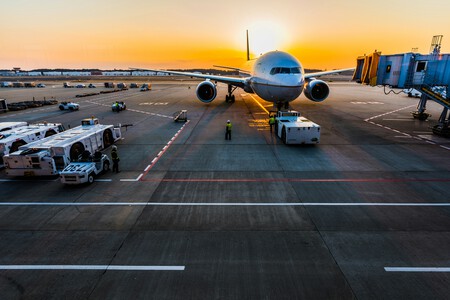
Eddie Kiszka (Unsplash).
Are these just words? no There are facts that prove Alvo is not wrong. Overall, Latam Airlines transported 10% more passengers between Europe and South America in the first seven months of the conflict (March-September) than in the same period in 2025.
And it’s not something that’s only happening at the company that runs Alvo. Advice by OAG Information Financial Times Show that in the first half of 2026, flight reservations from major European airports to South America (excluding Venezuela) increased by 6.5%.
Country to country. If we analyze the period January-August, we see that passenger traffic between Europe and Brazil increased by 5.3%, to Peru by 9.4%, to Chile by 12.7%, to Paraguay by 15.2%, to Uruguay by 16.4%, to Ecuador by 5.8% and to Argentina by 2.8%. Of course, when dealing with these statistics we must consider two keys that help explain them.
The first is that the Iran war began in late February. Second, the percentage only shows the evolution, not the number of travelers. Traffic with Brazil may have grown by only 5.3%, but it carried four times more passengers than Argentina. Some sources estimate that the Portuguese-speaking country received about 1.28 million European tourists in the eight months (January-August), 14% more than last year.

“detached from conflict”. For the executive director of Latam Airlines, there is little mystery in this percentage. He relates them mainly to the Iran War and its implications in the Middle East. After all, he slipped in his interview, South America is “too far” from the Persian Gulf, “and that’s good because it’s isolated from the conflict.”
Whether his analysis is correct or not, there is one indisputable fact: Dubai, Abu Dhabi or Doha, the cities affected by the shock wave of war are not just tourist destinations in themselves. For thousands of Europeans they are obligatory points on their journeys to Asia or the Pacific. In fact, the outbreak of war in Iran left some Spanish tourists stranded in Southeast Asian countries such as Thailand, as their return flights to the Middle East were blocked.
Some estimates indicate that a third of all travel to or from Asia passes through these Gulf cities. If we talk about routes with Australia, the number increases.
But it’s November, right? Although the war in Iran is far from over, the situation today is very different from the one in late February, when an alleged Iranian drone struck the facade of the iconic Burj Al Arab hotel and Dubai saw how expatriate They left the country and moved to heaven and death. Flight radar shows planes flying over the Persian Gulf and travelers returning to Dubai, but that doesn’t mean the scene is the same as it was on February 27, before Washington and Israel launched their attack on Tehran.
in focus. Although August was the best month for Dubai’s tourism industry since the start of the war, its hotel occupancy was around 66% and still 89% of last year’s level. Regarding airport operations, the Middle East has been marked by Houthi attacks (and threats) in Saudi Arabia in recent weeks (including damage to its central airport), which has led Asian, European and Gulf airlines to avoid Riyadh.
However, as indicated FTEmirates, Etihad and Qatar Airways, the main Gulf carriers, opened soon after the war to offer connections.
War… and something else. While the shadow of war may explain why a part of European tourist flows have been redirected from the Middle East, Asia and Oceania to South America, as Alvo argues, it is undeniable that before the conflict there were tourist-acquiring countries on the continent.
A clear example is Brazil, which is already on track for record numbers in 2025 It registered its second-best historical mark between January and July this year thanks, in part, to a 20% rebound in arrivals from Spaniards. In July, Argentina boasted a record number of tourists from “non-neighboring countries,” including Spain, and Mexico also had historic levels of foreign tourism with a 6.3% increase.
Of course, not all South American countries evolve in the same way. Peru records data as far back as 2025 and the OAG also mentions losses of European travelers to Colombia, Bolivia or (especially) Venezuela. “Europeans have always traveled (to South America), but now tourism is becoming increasingly frequent,” said the CEO of Latam Airlines. “All the luxury accommodations and hotels are complete and heavily invested (…). South America has the opportunity to become a destination that attracts the attention of those who want long-haul flights.”
Picture | Rafael Nogueira (Unsplash), Eddie Kiska (Unsplash) and Rocker Sta (Unsplash)
In Xataka | European cities with the most tourism per neighbourhood, in a graph where the most extreme cases are in Spain