When a company boasts that AI works for it and, at the same time, it’s had its best year ever, it shouldn’t be surprising that someone adds a plus one. That’s what happened to Lao Gun Ma, the successful Chinese brand of (addictive) chili sauce that has been trending on Weibo for a week. And not precisely because of its taste.
WHO? Decades ago, there was just a noodle stall behind Lao Gan Ma. In the late 1980s, Tao Huabi served noodles with homemade soy sauce and chili oil in Guiyang (Guizhou). They loved the sauce so much that they sold just that. Truckers who bought it exported it to other cities. Now 49, he rented a premises and employed about 40 staff; The factory was built in 1996 and the company was registered in 1997.
Since then, “China’s spiciest woman” has created an extraordinary rarity: a company without going public, without debt or external financing, according to her motto, with capital in the hands of her two sons. It has also generated a fortune estimated at over $1 billion and the brand earns about 55% of the country’s chili sauce segment. Of course, it gets even more complicated when someone accuses a firm built by hand, without investors and with the appearance of an “old godmother” on the boat, exchanging people for cameras.
What the company said. Now, let’s continue. In mid-October, at the Guizhou Quality Conference, its quality manager Li Jin explained that the 2025 turnover was about 5.4 billion yuan, an all-time high. He also boasted of an AI vision system at the Guiyang plant: industrial cameras that scan the belt every 0.3 seconds, eliminate moldy or blemished peppers, and release defective products at that “0.02%” level. A summary: in 2020 the company has already shipped 5,403 million, so the “record” is the maximum, the minimum.
the rumor It was circulated online that the AI reduced the visitors from 600 to 48. A thread by @kyleichan on the company came out saying the information is false. A human resources employee confirmed to Efeng that they use AI in inspections, that mass layoffs are false, and that they’ve never had so many workers.
the numbers The same thread recalls that the labor force went from 2,912 to 740 with the highest income. Be warned, they are the parent company’s insured workers, a company-wide statistic that doesn’t show how many recruits remain or why. It does not include subcontractors, temporary workers or support workers and may reflect normal leave or renewed contracts. “Less than 2,600” who moved through the network came through adding branches.
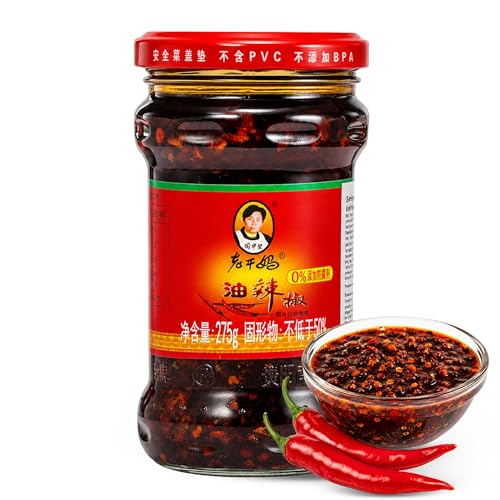
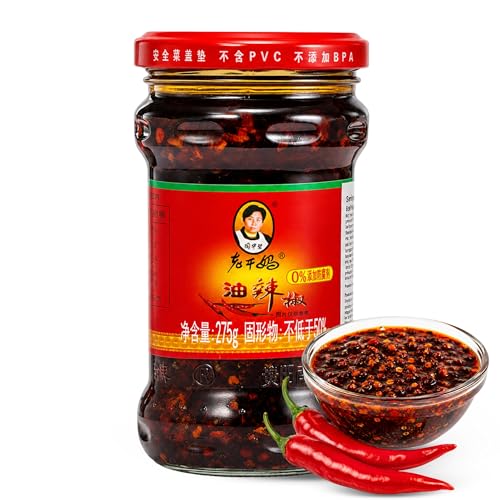
Crispy chili hot sauce, spicy oil, crunchy texture, strong flavor and balance between spicy and toasted taste, perfect for noodles ramen rice dumplings, 1 unit of 275g.
Prices may vary. We earn commission from these links
Market, friends. According to third-party data, daily sales on an e-commerce platform increased from 5,000-10,000 yuan to 1,000-5,000 yuan since October 22. That’s a small sum for a brand that rarely sells online, but it shows the buzz is creating a cost. Or, rather, minus it.
The reality is that this whole soap opera is born out of last year’s “AI Plus” plan, which will take 70% of the strategic sector in 2027 and 90% in 2030. And a section of the population disagrees with it.
Does it sound familiar to you? Part of the disbelief comes from instances where the promise of AI hasn’t panned out like it was sold. We have already mentioned how Klarna claims that its assistant has done the work of 700 agents. A year later, its CEO announced that it would hire people again. The Commonwealth Bank has sacked 45 customer service staff and apologised. According to CareerMinds, a third of companies that shed jobs due to AI have already reclaimed between 25% and 50% of those positions.
Of course remains that cut. Benioff said Salesforce has grown from 9,000 to about 5,000 support employees, and Duolingo has cut contractors to provide its AI. In factories, the Chinese precedent is compelling: a plant with robots has gone from 650 employees to 60 and production has increased 2.5 times, and China installs 280,000 industrial robots per year.
Fear vs. Data. An analysis by the New York Fed concluded that only 1% of companies said they were directly fired because of AI. In the US, of the more than 1.2 million cuts announced in 2025, about 55,000 were clearly attributed to AI. Ben Thompson, whose argument we reported on Xataka, maintains that many of the current layoffs are due to the pandemic rather than overemployment.
This does not mean that the effect is created. Stanford didn’t find a broad change in employment, but it did find that employment among 22- to 25-year-olds in highly publicized occupations is 19% lower than expected, because fewer are hired. Knocks usually occur sooner at the entrance door than at the exit door.
And it is possible that Lao Song Ma is telling the truth. Better camera quality will benefit everyone without leaving anyone on the street. With the current data, one or the opposite cannot be proven, as the company does not break out how many were selected before and how many now. But I stick with the phrase my wife always says: Any “eye” is threatening if its look is accusatory. Come on, they’ve hit a nerve and the company has to explain or Weibo, Chinese X, aims to rise above.
Picture | Compiled using ChatGPT
In Xataka | We thought we had an “AI bubble”. There are strong arguments to suggest we were wrong