SK Hynix just posted its biggest ever quarter, though claims the memory shortage is far from over. Operating profit from July to September reached 83.33 trillion won (about 55.61 billion euros), significantly beating analysts’ forecasts. Another fact: its revenue crossed the 100 trillion won barrier in a quarter for the first time. Investors can do nothing but wring their hands. For consumers, it’s another story.
Without brakes. SK Hynix is the market leader in high bandwidth memory (HBM) alongside Samsung and Micron. These are essentially chips that sit next to AI processors to accelerate large computational loads. According to Reuters, the company has about half of the market share and is one of the most important companies supplying Nvidia. Therefore, their numbers are a fairly useful indicator of how AI infrastructure spending is holding up.
The data comes at a time of concern, as the stock has more than doubled this year but roughly halved from June’s record, as investors watch how long investments in AI can last.
in statistics. Operating profit increased by almost 38% compared to the previous quarter and more than seven times compared to the previous year, i.e. 632%. Here is some information:
- Revenue was up nearly 32% in the quarter and 328% year over year
- Operating margin reached a record of 79.7%. They’re in line with Micron, which reported 80.7% margins last quarter, as reported by the Financial Times.
- Net profit stood at 39.78 trillion won (about 26,562 million euros), down about 58% from the previous quarter. The second quarter was complicated, as it was boosted by a rise in the share price of Kyoxia, a Japanese memory maker in which SK Hynix owns a stake.
The price of memory. The huge demand for memory for AI data centers has virtually broken the entire technology supply chain, with absurdly high prices and huge amounts of supply reserved by big tech and AI labs for the next few years.

According to CNBC, the average selling price for DRAM memory increased nearly 20% from the previous quarter, while DDR5 server memory shipments rose more than 40%. HBM4, the next generation of high-bandwidth memory, began shipping in droves this quarter. SK Hynix expects it to surpass the previous generation, HBM3E, in both volume and revenue in the fourth quarter.
They cannot adapt. The company says its DRAM and HBM production is virtually finished by 2029. HBM’s director of sales and marketing Kim Ki-tae said customers are ordering more than double what SK Hynix can supply, as shared by Reuters. The firm expects the shortage to last until 2030, given the technical difficulties of its production and the long time required to build new factories.
The company expects investment to increase significantly next year as its first plant in Yongin becomes fully operational. Asked about the risk of oversupply in a downturn, managers said they would build factories ahead of demand, but install equipment and ramp up production in stages, so expansion could slow if conditions weaken, according to the FT.
Chinese competition. Reuters has confirmed that Chinese CXMT plans to start production of HBM3E chips within two months, although it cautioned that only 20% of what it makes will be usable at first.
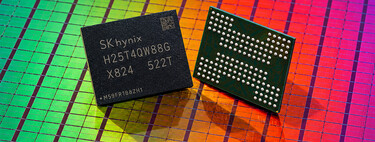
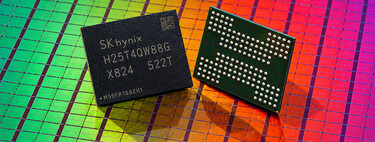
Cover image SK Hynix
In Xataka | The technology we use to make the chip is used to write ‘The Lord of the Rings’ on the edge of a sheet of paper.