It was 2015 when Los Angeles turned one of its major reservoirs into a massive “black sea” experiment. The city has thrown 96 million plastic balls to protect water from pollution and combat evaporation during the drought. The solution seemed brilliant on paper, but it hid a paradox: making those balls also consumed water, and a lot of it.
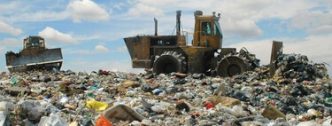
96 million black balls. In August 2015, pictures of millions of plastic spheres in the Los Angeles reservoir in Sylmar went viral around the world. California was going through a historic drought that would last between 2011 and 2017, and authorities were looking for ways to conserve their drinking water.
The answer was to cover about 70 hectares of the reservoir’s surface area with 96 million tiny black balls, a $34.5 million intervention that promises to prevent the loss of more than 1.1 billion liters of water each year.
The real enemy was invisible. Although the initiative was famous as a solution against evaporation, its main purpose was chemical. Exposure of water to sunlight favors the conversion of bromides present in reservoirs to bromate, a potentially carcinogenic byproduct whose concentration is regulated in drinking water.
The balls block about 95% of sunlight, slowing the growth of algae and reducing the need to use chlorine for treatment. Moreover, the idea did not come out of nowhere: Los Angeles began testing it in 2008 in the Ivanhoe Reservoir and subsequently expanded it to other reservoirs.
34.5 million solutions compared to another 300 million. Each sphere is about ten centimeters in diameter and made of high-density polyethylene, a plastic suitable for contact with drinking water. Its black color, obtained by incorporating carbon black, helped protect it from ultraviolet radiation, while the partially immobilized water inside prevented air from moving it.
The system was much cheaper than alternatives studied by authorities: dividing the reservoir and building large floating covers, an intervention initially budgeted at at least $300 million. Expected savings on investment exceed 250 million.
No one has seen the bill since Danga. In July 2018, research published in Nature introduced a variable that was left out of the initial story: water is needed to make the balls themselves. Researchers from MIT, Imperial College London and the University of Twente have calculated the water footprint of polyethylene, taking into account the oil, natural gas and electricity used in its production.
Their estimates place production costs between about 250 million and 2.9 billion liters of water, depending on the characteristics of the plastic and production conditions. In other words, while the innovation may save water in Los Angeles, it is consuming large amounts of the same resource elsewhere.
To save water, you first had to return the water used. In the reference scenario studied, about 2.9 million cubic meters of water could be needed to produce 96 million bales, while the estimated savings during the drought period analyzed was 1.7 million cubic meters. The researchers estimated that it would take about two and a half years for the system to offset its initial water footprint, if it maintained the same storage rate.
And there arose another difficulty. Outside of dry periods, evaporation decreases, so it may take longer to recover water consumed during production. The researchers’ work did not show that the balls were necessarily useless, but rather that their ecological effectiveness depended on a much more comprehensive accounting than reservoirs.
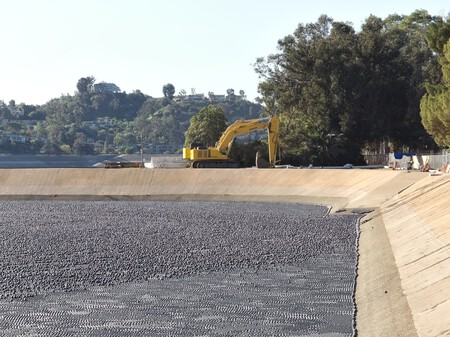
Eleven years later, plastic is also aging. Balls installed in 2015 had an expected useful life of at least ten years. The Los Angeles Department of Water and Power (LADWP) itself warned that, over time, they could lose their structural integrity, open at the joints or break, so they considered removing, recycling and replacing them periodically.
What happened since then? In 2026, that forecast puts the project in front of a new question: what to do with the millions of pieces of plastic that have reached their limit. initial horizon Service Currently, it cannot be confirmed how many balls have deteriorated, how many have been replaced or whether there is an updated full refurbishment schedule.
The problem of replacing them. As we said, Los Angeles previously used these balls in the Ivanhoe, Elysian and Upper Stone Canyon reservoirs, where they were proposed as a temporary solution while other infrastructure was built. The Sylmar Reservoir represented a different challenge due to its size and the high cost of covering it with conventional structures.
LADWP documentation continues to present balls as a solution for protecting water quality combined with ultraviolet light disinfection treatment. Again, although floating roofs and other technologies offer options, there is no official information on whether Los Angeles will seek to replace the 96 million spheres with floating solar panels or some other specific system.

The price of the miracle solution. The Los Angeles case does not prove that the black balls were a colossal failure. They fulfilled a basic sanitary function, allowed sunlight to minimize exposure to water, and offered a considerably cheaper alternative to the larger covers originally planned.
What the 2018 study revealed is, perhaps, something more unsettling: a technology can solve an environmental problem in one city, but shift part of its costs to another region, through the use of water, energy and raw materials. Thus, eleven years after the viral images, the great lesson of the experiment is not just how much the balls were able to save, but what it cost to make them, maintain them and, when the time came, to replace them before the regrets started.
Picture | JunkyardSparkle, YouTube
In Xataka | The 14-year-old boy managed to convince everyone that banning water was a good idea
In Xataka | In 1990, the United States dumped old tires in its concrete canals. Fish in artificial reefs are multiplied by 20