

Waking up in the middle of the night is normal for many people. Today it’s something we associate with sleep problems, but for some it may just be the memory of a past habit embedded in our sleep patterns for centuries.
he biphasic sleep It is a sleep pattern in which sleep hours are divided into two blocks separated by wake time. This is a sleep pattern popularized by historian Roger Ekirch and psychiatrist Thomas Wehr, who independently studied the phenomenon.
Ekirch discovered, digging through documents that cover not only the Middle Ages but also the modern era, repeated references to the “first dream”. This led him to compile a series of historical evidences from both fiction and official documents for the existence of a biphasic dream during this period.

As he explained to the BBC some time ago, this dream can have a brief first phase, perhaps between 9 and 11 p.m., followed by a period of waking that can be devoted to the most varied activities, from talking and praying to social visits. After this break from sleep, our ancestors slept again, this time until dawn.
Wehr reached his conclusion through a test. He assembled a group of participants (15 men) in a controlled environment and deprived them of artificial light. This makes the hours with light available for these participants from 16 to 10.
Under certain restrictions (participants were not allowed to play music or exercise) the researchers observed that the participants changed their sleep pattern to a biphasic one. The change occurred about four weeks into the study: Participants began dividing their sleep hours into two phases of roughly equal duration.
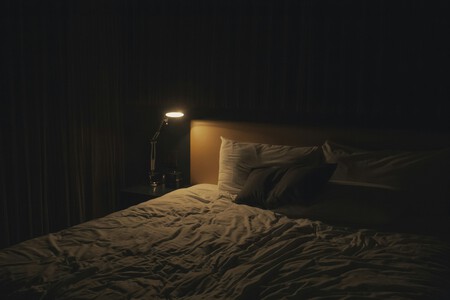
Wehr’s work also lays out key hypotheses for why humanity moved away from biphasic sleep and concentrated sleep into single blocks of uninterrupted sleep: industrial revolution.
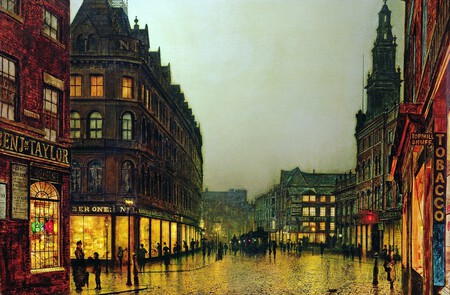
The main factor may be the development of artificial light sources. In the second half of the 19th century and the first years of the 20th century, various innovations and improvements made way for artificial light sources, such as gas lamps and light bulbs, in all homes.
The Industrial Revolution not only accelerated technological changes but also socio-economic changes. In this sense, people’s relationship with work and leisure can also influence this change. Work in the field was not scheduled, but work was done in the new factory. This standardization of workers’ time may help society embrace continuous sleep as a way to optimize our time during the workday.
which we discovered
The hypothesis, however, is not closed. In 2015, led by a team Gandhi Yetish and Jerome Siegel Followed 94 adults with activity bracelets from three communities without electricity: the Hadza of Tanzania, San of Namibia, and Simene of Bolivia. He found no fragmented sleep in any of them: they slept between 5.7 and 7.1 hours of effective sleep in a single block. Ekirch replied that they were equatorial populations, with shorter nights compared to European winters he had studied. In 2017, another actigraphy study of a nomadic farming community in Madagascar found “first” and “second” sleep patterns similar to historical records. The most cautious conclusion is that pre-industrial human sleep probably varied by latitude, season, and culture.

Over the years, Western societies have moved towards a post-industrial economic model and this has managed to create a new interest in other ways of sleeping. Many of these proposals aim to use more daylight hours and some are not advisable from a health perspective.
Polyphasic dreams are those that divide the hours of sleep into two or more blocks (when there are two phases they are called biphasic and when there are three phases they are called triphasic). Also “has sleep patterns with it”.proper noun“Like Uberman, which consists of six four-hour sleep-wake cycles with 20 or 30 minutes devoted to sleep; or Everyman, which reserves three hours of sleep for the night and then distributes the remaining three 20-minute naps throughout the day.
No, neither the Everyman nor the Uberman come close to getting the recommended 7 or 8 hours of sleep per day, but that’s just one of their problems. Throughout our sleep our bodies go through a series of cycles consisting of four stages: one called REM (rapid eye movement) and three non-REM.
Each of these cycles can last between an hour and a half and almost two hours, so a 20 or 30 minute dream will not allow you to complete any of these cycles. Benefits such as enhanced creativity or greater ease in achieving lucid dreams are attributed to short dreams. But giving up hours of sleep for short naps can affect our health.

human tendency adapt An example of this is the way we sleep in situations. We do not yet know that there is a sleep pattern that is optimal and universal for the entire species (it is possible that such a thing does not exist), so we can assume that the right option always gives us the most rest and adapts to our needs.
What is always advised is to maintain good sleep hygiene, which includes many diverse aspects such as maintaining a healthy lifestyle by exercising (though not the last hour before bed), avoiding screens and lights at bedtime, and maintaining a regular wake and sleep schedule.
These tips will help us avoid many of the problems that we associate with insomnia. If waking up in the middle of the night isn’t one of these problems, we probably have our ancestors to blame for it.
Picture | JP Valery, John Atkinson Grimshaw (Public Domain)
In Xataka | Global warming has a side effect we didn’t expect: it’s leaving us without sleep
In Xataka | There is a silent battle over sleeping with windows open or closed in summer. And science has a winner
aIn Xataka | We used to believe that sleeping with our dog or cat was a comfortable and healthy idea. Science shows it ruins your rest