
Last Friday, October 30, in his last statement to the media, Oscar Puente mentioned that the Madrid-Barcelona line could be closed for two years for complete renewal. The idea was put on the table after criticism that questioned how the Andalusian Corridor, marked by two very serious accidents (Adamuz and Urda) in just nine months, had been reformed.
What happened? “We’re evaluating it, but not just for a safety issue.” These words were, collected by VanguardOscar Puente during the press conference last Friday, October 30. In response to the media about the accident in Urda (Toledo) on October 28, the Minister of Transport confirmed that the possibility of closing the Madrid-Barcelona line was on the table.
Today, November 3, he reiterated that no decision had been made but that choosing the “German system” (stopping the line entirely for renewal) was “something that will have to be evaluated when the time comes.”
The reason? The Madrid-Barcelona line is going to be completely rebuilt. This high-speed line is the one that carries the most passengers, and a year ago a program was presented to completely renew it. The idea is to bring down the travel time between the two cities to under two hours.
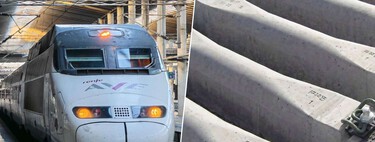
The aim is to completely modernize the infrastructure and this includes changing the current sleepers for “aero sleepers”, a Spanish invention that will reduce ballast flight when the train is in motion and allow it to reach a top speed of 350 km/h. In addition, the ERTMS system needs to be upgraded from Level 1 to Level 2 and new stations constructed to redirect traffic flow.
no. This is the response from Catalonia for the time being. “If it’s possible to reduce the investment affecting the service as little as possible, it’s desirable for everyone,” said Salvador Ila, president of Catalonia’s Generalitat and Oscar Puente’s party colleague.
The reaction pointed to a diplomatic refusal from Catalonia to stop rail traffic between the cities. In fact, Illa tried to drag out the point that what happened at Puente is a mere “reflection” and that yes, the work should be done “always with the highest safety standards and with as little service impact as possible.”
a mess. Closing the Madrid-Barcelona line for almost two years is a real mess in terms of mobility. In fact, the line is facing one of its worst moments since its inauguration, with the air bridge absorbing a portion of the traffic of those who don’t believe in traveling by train. Either for safety, comfort or punctuality.
Right now, the network that moved around 2 million passengers a year in its early days has now gone up to 15 million. Immediately after the Adamuz accident, the network suffered a minor collapse, which directly affected the transport of goods and workers, and an alternate road also collapsed.
In confidential They warn that the tourism sector has already claimed that almost 100,000 million euros are at risk, with 82% of trips between cities now made by train. The shutdown will even directly affect the growth of the country’s economy.
Is it necessary? The big question of whether the corridor needs to be closed came a year after the presentation. It was then suggested that the reconstruction works be carried out at night to minimally impact traffic. But this 12 months, Spain has experienced two serious accidents that have had an impact on how the work is viewed.
Renewal of the Madrid-Seville line has been extended over time. The ERTMS-2 system to be installed in place of the current LZB should already be in place but is not. Failure of the LZB system was one of the main factors that led to the accident at Urda (Toledo) last week.
Those who defend the complete closure complain of greater security and a smaller interference while working. Do not allow any trains to operate so that they can, again, restore traffic to 100% capacity. Unions maintain that these reforms will help them work faster and more safely since employees working on the Madrid-Seville line have not always had sufficient knowledge and experience.

A line was crossed. The worst thing for Madrid-Barcelona is that this line has suffered a serious decline in the last year. In November 2025, a qualitative leap was suggested, reaching a speed never before seen in Spain. Today, the entire high-speed system raises doubts among commuters.
In the summer of 2025, Talgo’s AVLO trains hit the line. At that moment Adif, Talgo and Renoff started exchanging insults. Some claimed the problem was with the train and others attributed it to infrastructure vibrations.
In January 2026, after the Adamuz (Córdoba) accident, the first action was to reduce the speed of the Madrid-Barcelona route. Vibration was back in focus. A thorough inspection of the tracks has eliminated unexpected delays and end-of-day shifts. Today, about a third of the kilometers between Madrid and Barcelona are limited to 30 km/h. The Urda accident has once again cast doubt on the maintenance of the Spanish high speed.
Picture | Andre Marques
In Xataka | Spain’s most ambitious railway challenge yet: Madrid-Barcelona in less than two hours. And you have already taken the first step