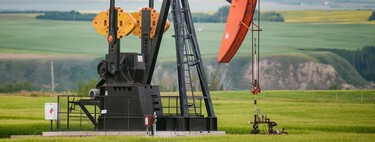
In recent years, China has launched a significant number of projects that are very ambitious. It has the New Silk Road running, it has also started to lead in battery manufacturing for electric vehicles and in the solar panel segment Another objective is to suppress its desertification. That is why it has undertaken the construction of huge solar farms, but it has also started to create kilometers long craters.
One of them is Shendi Tech-1 which is a remarkable feat with a depth of about 11 km in record time.
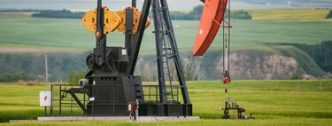
be quick. This desert in China’s westernmost region isn’t just vast: it’s a mine. A field, rather, and an oil company China Petroleum and Chemical Corporation, or Sinopec, is exploiting on a good basis. The basin is estimated to contain some of China’s most promising oil and gas reserves, with more than a hundred wells in the Sinopec region.
The problem is that this is an area where it is well buried and it is estimated that a large part of the reserve is between 6,000 and 10,000 meters. In November 2023, Sinopec announced the first results from Project Deep Earth 1-Eugene 3-3XC, a well over 9,400 meters deep (with a planned horizontal displacement of 3,400 meters, so it’s not vertical) to extract oil at that ultra-deep level. And although this was an achievement because of how quickly they built it, it was soon taken over by a well from a rival company.

Shendi Tech-1. In the same desert, China National Petroleum Corporation, or CNPC, drilled Shendi Tech-1, a vertical well that became the deepest in Asia for its depth of 10,910 meters. Drilling began on May 30, 2023 and was completed on February 20, 2025, becoming the world’s deepest vertical well behind only the Kola well.
Its records include the first ground discovery of oil and gas below 10,000 meters and the well has a dual purpose: scientific research and hydrocarbon exploration.
Colossae. from all sides. Such a deep ‘hole’ attracts attention in itself, but it is even more intriguing if we consider that it took 580 days of drilling to “only” reach that depth. The most difficult was that final 910 meters and it was the one they spent the most time on: 300 days.
The question is why the last 910 meters took longer than the previous 10,000. The answer is because, as the platform director commented, “Every additional meter of drilling at a given depth increases the complexity exponentially.”

We need another drill bit. As we go deeper into the crust, the temperature increases. At 10,000 meters they rise to over 210 degrees Celsius and the pressure is enormous, forcing CNPC to build an automated drilling platform with the potential to reach 12,000 meters.
Not only the head, but also the diamond drill bit, was designed to withstand the temperature: a coolant capable of dissipating heat at that ambient temperature was also created, and components such as screws were also designed to maintain their integrity at all times.
This is not something that was done only for this well, since China aims to lead in ultra-deep drilling thanks to this equipment, 90% of which is domestically produced, so that the platform can be easily replicated without importing too much material. Indeed, Zhentan-1, the second well drilled with that platform, reached 8,345 meters in October 2026 and yielded a rock core approximately 500 million years old at 8,080 meters.

dual purpose. Beyond oil and gas extraction, Shendi Tech-1 enables geological exploration. This makes perfect sense: it traverses 12 geological formations and reaches rocks more than 500 million years old.

crazy. The initial plan was to reach 11,100 meters, about the limit of what the drilling platform could deliver, but work was completed at 10,910 meters. According to some media reports, it stops when the presence of gas is confirmed before reaching this level. China can be happy even if it doesn’t meet its ambitious targets.
In addition to making it possible to better study the planet’s interior in Asia, the country has secured the equipment and capacity to exploit one of the world’s most complex oil reserves: 80% of deep oil and about 64% of deep gas in the Tarim Basin below 6,000 meters.
And yes, China still hasn’t gotten over SG-3 very well. Known as the Kola Superdeep well, it took the Soviets 19 years to drill a well that reached a height of 12,262 meters, but in contrast, whose purpose was to study the lithosphere, Shendi Tech-1 served not only to satisfy scientific curiosity, but also to extract liquid gold in the process.
Picture | CNPC (2), Sinopec
In Xataka | While the world trembles for oil, China has another plan: absolute dominance of uranium